
tt stern-enzi
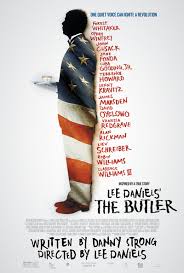
A fascinating conversation takes place in Lee Daniels’ The Butler, one about race and race relations, but it is not the expected dialogue using the politically correct language that has drained any life or potential for the deepening of cultural awareness. The exchange here is not even between races; this is not a black and white discussion at all, despite the presence of both blacks and whites with historically vested interests. The Butler strips it down to a conversation among black folks, broken down along generational lines to a certain extent, although to define it that broadly lends itself to obvious stereotypes without accepting that there is a real element of class muddying the waters as well.
Once upon a time, as the film points out early on, black folks had two faces – the one they presented to greater (white) society, the non-threatening smiling mask that kept the peace and kept black men, in particular, alive and reasonably well and the other one lurking behind the facade, the face that was the true self, that saw the world for what it was and barely contained all of the anger and frustration of dreams and promises unfulfilled – and there was a special talent far beyond mere survival instinct in the brandishing of the faces. What we’re talking about here is performance, award-caliber, on the daily, complete with subtle winks and nods exchanged between black folks every time we passed one another.
The mask though contained multitudes of shades and shading, to the point of achieving a state of invisibility, which Ralph Ellison so eloquently laid bare in Invisible Man. While the invisibility was predicated on white people and their refusal to see us, there was a willful practice and perfecting of this ability to hide in plain sight. At its heart, this is what Cecil Gaines (Forest Whitaker) executes throughout The Butler.
He is mentored early on regarding the rules of the game and the development of the necessary skills in order to perform at the highest level.
– as a butler, you see what they (white folks) want, and then you begin to anticipate
– you hear nothing, you see nothing, you only serve
Cecil knew from experience that you did these things, in this way, because “any white man could kill any of us at any time and not be punished.” He had seen his father die for questioning the sexual molestation of Cecil’s mother on the cotton plantation. Go along to get along became his unspoken mantra.
The dialogue starts though when Cecil has children. Departing from the reality of the real Butler (Eugene Allen), Gaines has two sons, but only one that he communicates with, engages in the meaningful dialogue on race that matters most. Louis (David Oyelowo) is that other side of the coin for Cecil, the counter to all of the lessons that Cecil has internalized. Louis is the new black, rejecting invisibility and the two faces. He has one and only one face, what he believes is his true face. No mask to flip back and forth.
Which sets up the race argument. Two faces or not? Today’s African-Americans don’t cotton to the idea of needing a mask or desiring to disappear, not when black cultural contributions have been absorbed into the popular mainstream of society. Movement and language, the power of the voice, the explosive grace of the form in sports and dance. The political revolution, the televised win in November of 2008, the celebration in Chicago. A black man residing in the White House.
That is not something Gaines/Allen ever considered. None of us dared to dream that dream. That mountain was too high, much too high, but the debate plays out onscreen in The Butler. We know the winner. The deck is stacked in a way, but Daniels gives us the sound bytes and it is easier for audiences, black and white, to hear.
But it is the other voice, that other side of the argument that has started to drown out the nostalgic dichotomy, even as Daniels’ film seems more than willing to concede that they have indeed presented a compelling and winning case. The masks of old have been removed and burned like the draft cards and bras from earlier cultural revolutions. A movie like Fruitvale Station proves this point. Fruitvale‘s subject Oscar Grant (Michael B. Jordan) refuses to hide behind a veil of studied invisibility. He displays his each and every emotion front and center. Make no mistake though, Grant, as portrayed onscreen, wields charismatic charm, but he does so to sneak inside defenses, to get closer in order to be seen and recognized as a complex individual.
The directors at the helm of these two projects highlight the generational shift in the conversation. Daniels, at 53 years old, is old enough to remember and have likely face-switched through a significant portion of his life, especially during his time in Hollywood. That he is cool enough to embrace the new mode – seen defiantly in Precious – does not negate the fact that, if you watch closely, you see that he has not burned his mask; rather, Daniels carries it in his hand, for all to see. He just realizes there’s no need to slip it on. Ryan Coogler, on the other hand, was born in 1986, which easily serves as a dawning period for this new age of heightened visibility. Rap was starting to make some real noise, challenging the older black audience weaned on soul and rhythm & blues from the 1960s and early 70s, to accept the evolution of black music or else. Coogler, undoubtedly knows the history, but he probably never had to live it, so all he can do is embrace his (and his generation’s) experience.
These films, and the real current debate on race, seems to belong to African-Americans alone, more so than the greater society. Let the media and its social components take stands on the social justice issues as they relate to race (crime & punishment, voting rights, even immigration – where we never discuss the gulf between black Americans and African immigrants), while we huddle up over this thorn.
It will be interesting to see how, a decade or two from now when we find ourselves in the grip of cultural reflection, the post-racial will play out in our narratives. What will be the counter-argument in that debate? Will we remember a compelling position within the African-American community, a re-masking movement or will this notion walk, however proudly as Cecil Gaines does at the end of Lee Daniels’ The Butler, into its final resting place?
 terrencetodd
I’m gone to convey my little brother, that he should also pay a quick visit this blog on regular basis to take updated from hottest reports.
What’s up, just wanted to say, I loved this blog post.
It was funny. Keep on posting!