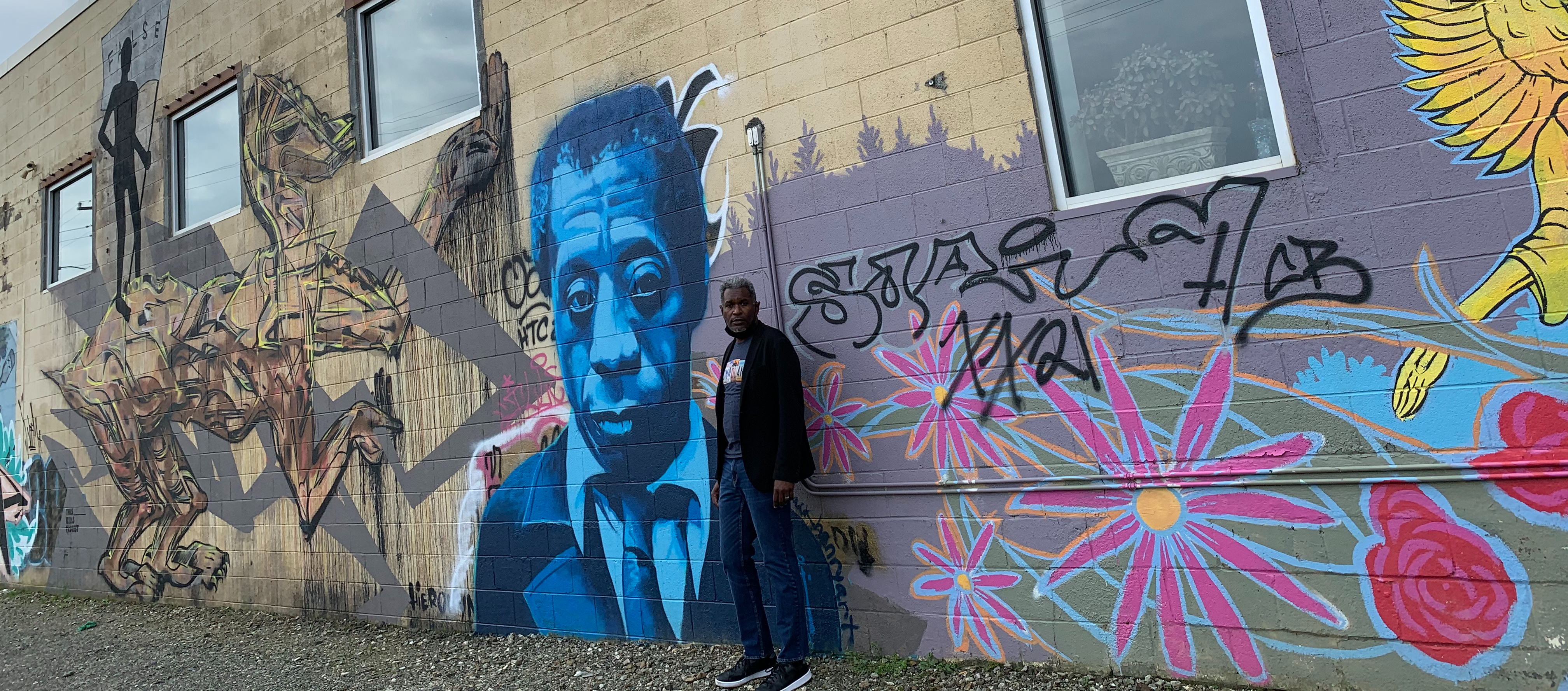
Reflections on Fatherhood (Literary Remix)
I grew up in a world without fathers.
That statement sounds either ominously dystopian (by way of Octavia Butler or PD James) or mighty pretentious in what I would probably define as distinctly Southern, since that is how I am sometimes prone to labeling myself. I’m prone to seeing the world and my experiences as scenes from a black and white independent feature and I’ve got that In A World…voice-over guy in my head reading that line like it’s from the greatest story never told.
I met my biological father for the first and only time about 11 years ago, so, for me, the idea of fatherhood had been defined by an absence, a void. My father wasn’t a working dad who presided at the head of the dinner table or tossed whatever ball was in season at the time in the backyard. My father simply wasn’t around, not that there’s anything the least bit simple about it. He existed in a couple of random anecdotes from my maternal grandmother who helped raise me. Whenever she made mashed potatoes, she always reminded me that they were his favorite dish or sometimes I would catch her watching me and she would say that I moved like him as if my love of creamy rich Southern spuds or the expression of my pre-teen nervous energy could be attributed to a genetic factor.
My mother rarely mentioned him before I turned 18 and even now, over thirty years later, what I’ve pieced together from her, barely more than a name or a few discernible traits, still fail to transform him into a man of substance. Much like the unnamed protagonist of Ralph Ellison’s Invisible Man, my father is “a spook like those who haunted Edgar Allan Poe…one of your Hollywood-movie ectoplasms.”
Of course, when I thought there was something truly unique about him and our story, I came across The Invention of Solitude by author Paul Auster, who wrote of his own father, after his death, in similar terms.
He ate, he went to work, he had friends, he played tennis, and yet for all that he was not there. In the deepest, most unalterable sense, he was an invisible man. Invisible to others, and most likely invisible to himself as well.
Auster had known his father. He had seen the man engaged in all of those routine activities. He had the proof of his senses to substantiate his father’s existence, although, he notes that the man was “incapable or unwilling to reveal himself under any circumstances.” I would argue that Auster’s father did reveal something of himself, of his own accord, by his mere presence, whereas, my father had devoted himself to a strict, religious adherence to the creed of his invisibility.
I first laid eyes on him when I was seven or eight years old. Rummaging through a collection of old photographs and family documents, I found myself face-to-face with this yellowing couple from their wedding day (Valentine’s Day, 1969). The visage of the woman looked nothing like my mother, the woman I saw everyday, but I was familiar with this earlier incarnation of her, this powerfully revolutionary mix of youth and wisdom, so common among the Black counter-cultural generation.
But he was the one I couldn’t understand. I immediately grasped the context of him, standing next to her, he had to be my father because this was from their wedding and I knew, or at least on some level, I could appreciate my inevitable presence. I recreated myself right then and there, from the two of them, as they were in that frozen frame. So much of me came from her – she was all I had ever known – but suddenly, I lifted trace elements and features from him, grafting them onto myself then. I was the good doctor Frankenstein and the monster.
But I wasn’t him, was I?
What kind of question is that?
Classical overtones, mythic and Shakespearean, to be sure, but somehow also a common query for a young Black boy coming of age in the late 1970s and early 80s, the kind of question that sets him on to gaining an advanced degree in fatalistic pre-cognitive analysis? By my pre-teens, I knew what the data said about Black boys raised in homes without fathers. We weren’t likely to graduate from high school, attend college, or become gainfully employed productive members of society. The prognosis was that I would probably not make it to 25 years of age without having been arrested and incarcerated at least once for either a drug-related offense or a violent crime. Just the facts, right?
It’s no wonder I retreated into more speculative inquiries full of metaphor and metaphysical matters that wouldn’t touch me like the prying eyes and bleeding hearts of society. So, I let that photo recede deeper into the past. I rarely talked or thought about him and what he meant.
* * *
By the time I reached my early to mid 20s, I began to understand how he had inspired me to become the exception to all of those well-documented rules and notions about young Black men. I recognized, however faint and indirect, his influence over me and the life I was constructing for myself, but I didn’t want to acknowledge his hand in my identity. I sought, instead, power over him.
I started a novel (Finding Father) with the more literal (and obviously literary) intention of creating my father from the jig-sawed fragments I had collected as a child, pieces that would hardly constitute anything approaching the hard fact of bone, the sinewy strands of muscle and certainly not the detailed features of the flesh. I assumed that if I could take those bare elements and charge them with a creative spark then I might be able to breathe life into the man. From there, I figured I might even track him down and compare the two, the real versus the imagined.
The story I began is driven by a son’s headlong rush towards a personal reckoning – the arrival of his own child – and the questions regarding the type of father he will be. So he reaches out, across the years and the great divide, to his own absent father, initiating an odyssey, a meandering Southern Gothic road trip with apocalyptic confrontations as they soar towards the bright light of truth and consequences on makeshift invisible wings.
The dark truth was the novel had less to do with a creation myth; it was my attempt to destroy him. I longed to be some kind of Black Oedipus, without the benefit of blind rationalization that comes from not knowing that the man on the road that he slays happens to be his father. I would take command of my own prophetic destiny, bringing the two of us to that fateful roadside encounter, where we would know full well our identities and exactly what was to result from that confrontation. I was going to lay him low, right there in black and white. And I imagined him reading those words, the account of that tragic deed.
* * *
By the time I found myself in the midst of this willfully mythic re-creation, even though I was living on my own, working and devoting as much of my free time as possible to writing, I had, for the first time, a male role model, a stepfather. My mother remarried at the start of my junior year at the University of Pennsylvania. I had not been able to attend the wedding, but I shared a moment of silence with my off-campus housemates the afternoon of the event. I was happy for my mother, but uncertain as to what this would mean for me. What need did I have, at this point, for a father?
Pops, as I soon dubbed him (thanks to his comforting resemblance to Pops Staples of the Staples Singers), quietly and unassumingly became the presence I didn’t know I needed.
Less than six months after their marriage, he drove me back to school (from Cincinnati to Philadelphia) and watched my first intramural basketball game, following a significant period of rehabilitation after a freak subway accident nearly stole a limb or two from me. He was my mother’s proxy; there to decide whether or not I was ready to actively compete during the season, and I found myself playing harder, not only because he was reporting back to my mother, but also to impress him. I found myself wanting his nod of approval or his firm handshake, which he gave freely and often.
During my post-collegiate working years in Philly, he visited me often, coming on several occasions without my mother to stay for weeklong vacations. I took him to work with me, cooked for him when I got home, spent time in Rittenhouse Square people watching with him. He was, is and always will be my Pops.
* * *
Therefore, the desire fueling Finding Father was losing the necessary oxygen to sustain itself. The literary conceit still held some sway over me because it played on the surprisingly strong instinct in me to be the kind of father that my own had not been for me. I dreamed, and actively set those dreams and longings down, of assuming the role of father to a son of my own. The book was to be an alternative/revisionist take on not just my father, but the history of his relationship with my mother and a what-if scenario involving my fictional preparation for fatherhood. The problem was I happened to be nowhere near that stage in reality, and there were no likely prospects on the horizon, plus with Pops stepping in as he had, there was even less emotional motivation, so after 12+ chapters with incomplete notes scattered hither and yon, Finding Father faded to black.
* * *
Despite all that, my father – the flesh and blood version of him continued to walk the Earth. Towards the latter portion of the 1990s, my mother and Pops returned to Asheville for a funeral and had a chance encounter with my father.
Pops reached out to me. He told me that he wasn’t even aware, at the time, that he was being introduced to my father, and he expressed his sadness over the fact that he couldn’t pass along a more detailed impression of the man, but he offered to travel back home with me to meet him, if I wanted.
I didn’t take him up on the offer, but about ten years ago, it was my mother who set me on course for an inevitable meeting with my father. Over a decade after that incident, she informed me that there was a notice in the Asheville Citizen-Times about my father concerning a recent arrest. As soon as I got off the phone with her, I fished out my laptop and ran a search through the state’s records. It turns out my father had a few previous run-ins with the law. All of a sudden, I was a kid again, wondering, worrying that somehow, some way, this would be my eventual path.
* * *
I had always been haunted by the climatic confrontation between Charles Van Doren (Ralph Fiennes) and his regal father Mark (Paul Scofield) in Robert Redford’s Quiz Show. As Charlie admits to his involvement in the game show scandal, he defensively offers a rationalized desire to strike out on his own in some way. It was, he pleads in high Shakespearean fashion (As You Like It), “an ill-favored thing…it was mine own.” But, his papa sternly reminds him, “Your name is mine.”
All my life, I had carried his name like some boogeyman, a reflection that would reveal some crucial aspect of my identity, if it was ever discovered. As I prepared, finally, in my mid-30s, to marry, I took one of the first significant steps to inoculate myself, removing a fundamental link between us, by changing my name. It started and ended with such a simple stroke of the pen, a severing of ties and a rebirth.
“Your name,” I countered, “wasn’t mine. Not anymore.”
* * *
I entered into marriage bearing nothing and no one other than myself, while my intended came with two young children (four and seven at the time of our wedding), an ever-present ex-husband and a seemingly endless set of former in-laws who weren’t quite ready and/or willing to go quietly into the night. On top of all that, we came from such different cultural backgrounds. She was a New York transplant in the Midwest, a self-identified cultural Jew from an extended family without a single divorce in her immediate line, prior to hers. I, on the other hand, was a Southern Black Catholic, a forever practicing progressive Jesuit, with no idea about how to raise a couple of white kids who would never call me Father.
And I wondered sometimes, would anyone ever see me as a father?
I stumbled across an insightful personal essay by Michael Chabon (“William and I”) in his collection Manhood for Amateurs that discussed the pitifully low standards for fathers and fatherhood in modern society. What does it say about a society when a father like Chabon can be out at the market with his young son in one hand, while unloading his basket with the other hand, only to be looked upon by the female customer waiting behind him in line with overwhelming praise. The woman follows up her undue attention with an unsolicited comment: “You are such a good dad,” she says finally. “I can tell.”
This anecdote kicks off Chabon’s comical observations about himself as a bumbling parental figure and some obvious yet pointed social commentary about why he would receive such attention whereas no one would waste a second glance on his wife given the same situation, let alone feel it was worth bestowing a word praise on her.
Everytime I read the essay though, I wish I could appreciate the wry humor of the premise, the Seinfeldian critique of this little nothing moment that actually rises to the status of meaningful reflection, but I can’t because I don’t exist in that situational moment, not in the way Chabon does.
I can recall packing our youngest up in the car and take her with me to the neighborhood Starbucks where I worked when I need to get away from the blank walls of our home. We entered and right away, I watched the full human host of our caffeinated patrons scrambling to figure out the “who is he, and what is he to her” dynamics of our relationship. No one ever makes the initial assumption that this sandy-brown haired child could be mine, and yet, if our races, and not our genders, were reversed, people would draw the conclusion that she was my adopted child without breaking a sweat, and baptize me in the sanctified fountain of Liberal grace.
You see, no one outside our immediate community sees me as a father.
And of course, there were darker moments too. A midnight screening of a new release that I took our older child to, at that point they had possibly just crossed over into their teens, and they already had the more dangerously mature look of a high school age kid. We sat on a bench together waiting to enter the theater, watching others wandering about, as they surreptitiously eyed us. I could hear the amber alerts going off in those urgently concerned gazes.
I sit, ramrod straight with my child’s head on my shoulder, quietly defiant, knowing that I can do nothing else, even though some part of me wants to flee. This is what it means, to step in.
* * *
Maybe, even after all this, I was too bold, just like my father.
He walked away and, by writing about him, I had hoped I was reversing the order, birthing him, shaping him, and altogether fathering him, as he should have done for me. And too, maybe, like my mother, I wasn’t satisfied with the idea of him, which explains why I hadn’t yet followed through on this act of re-creation (word made flesh).
Not like Jacques Cormery, the protagonist of Albert Camus’ posthumously released incomplete manuscript The First Man, who makes a pilgrimage to the square of French Remembrance where, in a large journal he finds the name Cormery Henri and a notation reading, “fatally wounded at the Battle of the Marne, died at Saint-Brieuc October 11, 1914.” And then, a caretaker leads him along a row of gravestones to the one belonging to Henri. Confronted by the dates on the marker (1885-1914), Jacques realizes that his father was twenty-nine years old and that he, at forty, is older than his father was at the time of his death.
* * *
Death, it seems, brings writers to the brink of existential investigation. Here is where I return to Auster and his memoir. He found himself remarkably composed when news of his father’s death arrived. He was married with a young son and resigned to this final stage in the life cycle.
One day there is life. A man, for example, in the best of health, not even old, with no history of illness. Everything is as it was, as it always will be. He goes from one day to the next, minding his own business, dreaming only of the life that lies before him. And then, suddenly, it happens there is death.
But death led him to a realization: his father had stepped away and left no traces. Digging into the dirt of my father’s past forced me to face my own mortality, and gave me the reason I needed to finally step to him. Besides his public arrest record, I found out, again through my mother, that my father and his two brothers had been diagnosed with prostate cancer, which had also claimed the life of their father (my paternal grandfather) back in the mid-90s. Having just entered my 40s, my mother and wife formed an effective tag team urging me to have routine prostate exams.
My conception of my father shifted in a decidedly more complex way. I was now linked to this man and through him I likely carried a predisposition that could kill me and there was nothing I could do about it. Having maintained a healthy active lifestyle (no red meat, marathon training for 15+ years) would not offset this inheritance. I wanted to have a face to connect with this emerging reality.
With my mother’s help, I finally arranged a visit. I drove back home to Asheville with my wife for a long weekend. As soon as we arrived, after a brief phone call, I found myself, at long last, face-to-face with my father at a treatment facility for veterans dealing with substance abuse. I stepped before him, giving him no notice or chance to back away from the encounter. He looked into my face and eyes with no sense of recognition.
As he crossed the lobby coming towards me and I squinted, searching for some reflection of me in his face and then some hint of that face of his from the wedding photo I’ve carried in my memory for the last 30+ years, all of those lessons on etiquette slipped away and I truly was punch drunk with my guard down and out for the count.
I went blind, the kind of blindness that I would describe now as a paralysis, where my eyes failed to register any significant detail of his face or the surrounding space. He was just an approaching shadow. In hindsight I redesign the interior adding institutional furniture, a few other bodies huddled together on the couches and chairs, no doubt engaged in their own awkward exchanges. On either side of me stood my wife and one of his cousins who had helped me to arrange this visit.
There he was. I could see him wondering, searching for some meaning in our faces. I wanted to see some recognition in his eyes. I wanted to see him put it altogether, so that I wouldn’t have to say anything at all. I had rehearsed this meeting too many times to count, but I had never been able to come up with a brilliant twist, a shocking quip, that would elevate the exchange to something mythic or even the level that it would be worth hearing coming out of someone else’s mouth in the film based on this moment and our overall story. Secretly, I’ve always wanted that big screen treatment because I’ve never been able to hear anything in his voice and I suppose anything from another voice besides my own would please me.
I gave my name, my first name, because we no longer shared a surname. My last name is mine own; it belongs to me. I changed it legally before I got married, so that my wife could take it and it would be ours. I didn’t tell him that, not at first. I just repeat my first name, and he realized who I am. I look down and watch as my hand extended. He took it and then clumsily me, into his arms and I didn’t know how to respond. I stiffened, gave him two quick pats on his back and separated from him. I introduced my wife, but she and his cousin, they receded into a state of invisibility as he ushered me to a spot away from the main lobby where we sat side-by-side in the whispered intimacy of prayer.
I imagine my grandmother frowning. Nana, I’m sorry.
What did he say? Much like I recreated the environment, I found that I also had to fill in certain gaps here as well. Of course, we’re talking about canyons, whole voids of time and experience. I didn’t ask him where he had been for all my life, and he didn’t try to answer that question either, but he talked, on and on, as if this was the start of a new episode of his televised biopic and he was summing up the previous installments. Or maybe he was rebranding himself in the hopes of winning my loyalty. This is what it’s like to see the spin game in real time. It is a surreal experience.
And it is strange that we should be strangers with this fiction between us – like father, like son – even though, in that brief moment, we are exactly alike, struggling to make a suitable first impression.
* * *
What I bore was a burden of an entirely different kind. It was the genetic impact of what I realized I carried within me. Less than two weeks before our meeting, he had buried his older brother, the latest victim of our heavy legacy.
It is so strange for me to read the words “our legacy” and hear myself claim it so readily. So much of this story, my story is about denying him or asserting my self as if all that matters, but this predisposition, this inheritance of mine, comes from him and there’s no way I can excise myself from it. I can’t unmake him or recreate him and save myself in the process.
Thank you, Father.
Don’t mistake that last comment as a sentiment spoken in anger. I bore no ill-will. That was the first thing I took note of as we stood before each other. It was an unseasonably warm February day. I felt a certain anxiety in my wife sitting in the passenger seat next to me on the way to the meeting, but a stillness had overtaken me. One way or another, I knew this chapter would be over for me.
And, was it everything I imagined or had written in that early draft of Finding Father?
Let me say that I am nowhere close to the writer who would have astutely drawn the scene up and found it to be much less than anyone would have expected. Anti-climactic overstates the reality. I heard him speak, a rush of words, like he was throwing everything into this one conversation, 40+ years, selling, re-branding it for me, as if I could be hoodwinked into buying this new version, wholesale.
I can’t say I listened to him or even saw him all that clearly. Maybe I saw too much, the critic in me peeped through the special effects, the myth and magic of what he was supposed to be. He was just a man, too full of nothing but words.
* * *
He is dead now. I received a call from one of his nieces, the daughter of his youngest brother, at the time still-living, the lone survivor from his generation of our legacy. She is a few years younger than me, and she said she wanted to reach out, first to invite me to come to the funeral and second to extend a hand, an acknowledgement that there is more than just this dark legacy. I listened to her. Her words were imploring and heartfelt. I declined to attend the funeral, but left the door open for another connection; maybe later, away from the maddening crowd of vaguely familiar faces. I also offered my condolences to her for her loss because I could hear, in what she said about my father that he meant something to her, and I was glad (and of course sad) for her.
I remember though, the year before, when he called me on Father’s Day, a couple of years after our meeting. His voice bearing words, more words. I caught myself wondering if I should call him back, and smirkingly asking myself if I should wish him a Happy Father’s Day. Would he take it as a joke? Would it be funny?
He called a second time that day, while I was grilling for my wife and children. I didn’t answer and he left no message this time. I think he understood. I was letting him know not to call me again. That chapter had finally been written and laid to rest.
A Festival of Fathers at Sundance 2024
If the relationship of father to son could really be reduced to biology, the whole Earth would blaze with the glory of fathers and sons. (James Baldwin)
How do we define what makes a good father? Mothers are always there; they always show up, especially when fathers don’t? From a sociopolitical perspective, single parenthood is largely about mothers. There is a funny notion about fathers onscreen. They are bumbling and comedic. The general rule is fathers don’t know best.
Where does that leave Black fathers? Even further behind the stereotypical curve. We can’t even embrace the one Black father (Bill Cosby) who was the best onscreen version we had, because he is persona non grata in cultural conversations now and forever, which is worse still for me, because I have a couple of great stories of meeting and spending time with him that I can’t use for cocktail chit chat.
What about Sidney Poitier? Black icon, but never as a father, although we did get to see him as a son, albeit briefly in Guess Who’s Coming to Dinner. The track records of Denzel Washington, Morgan Freeman, and Samuel L. Jackson don’t exactly add up either. Denzel serves as a mentor occasionally (think Antwone Fisher or The Great Debaters) or a protector of children (Man on Fire), but outside Mo’ Better Blues, He Got Game and Fences, he is simply a singular force of nature. Will Smith serves as an intriguing exception to this rule. Not only two mainstream films (After Earth and The Pursuit of Happyness) where he steps up as a father, but he’s literally acting opposite his own son (Jaden).
So, what did I expect to find during my first in-person trek to the Sundance Film Festival? I was determined to find a take or two on paterfamilias. Not just fathers, but parents that I could see as a reflection of the type of father I wanted to be. I assumed they would likely not be Black, because…well, you understand that we aren’t represented like that in the fatherhood pantheon.
The thing is though, the pantheon of fathers isn’t inherently perfect. Greek mythology is rife with bad fathers. Male gods who cat around, abandon their offspring, and/or create epic trials for them to overcome. Sons kill their dear old dads and marry their mums (and serve as inspiration for a gaggle of psychological disorders). Sometimes though, the sons go on quests to reconnect and/or free their fathers from prisons or fates worse than death, only to fly too high and die themselves.
That’s just real-life family drama though, right?
Ghostlight (directed by Kelly O’Sullivan and Alex Thompson)
Shakespeare seemingly provides the opening reflection point for the theater of life. All the world’s a stage and his work brought all facets of life to bear for all to see. When it comes to Black folks, largely our connection to Shakespeare begins and ends with Othello, which feels strange since more often than not, adaptations of Othello have historically featured white performers in blackface who receive credit from the critical thinkers of the day for capturing the essence of the Black experience far better than any Black performer ever could.
But what happens when and if we (and in this case, I mean Black people) free ourselves from the strict adherence of racial identity as the arbiter of authority and authenticity? This question bubbled up for me during my Sundance screening of Ghostlight.
A distraught construction worker (Keith Kupferer) explodes on the job one day and his outburst is seen by a community theater performer (Dolly De Leon) who convinces him to join the local production of Romeo and Juliet. At first, the invitation is nothing more than an opportunity to engage in therapeutic exercises to manage his anger, but soon he discovers the universal nature of Shakespeare’s work. Eventually, he is even cast as a much older version of Romeo and must grapple with the power of young love and its potential to lead to suicide, if said love is not given the space to live and breathe freely.
The crux of the narrative is about facing and understanding where such desperation comes from and how his own tragic loss mirrors this situation. A father not connecting with his own children.
I watched this play out and slipped into the old school code switching Black folks have been engaging in for decades. I sat back, thinking of my own children, longing to see a Black man, a Black father caught up in this dilemma. It wouldn’t matter if his children were his by birth, marriage or adoption.
Romeo and Juliet could benefit from a more liberal reinterpretation. How about Romeo as a young Black man, in love with a young white woman from a family of means – families with a rich antagonistic history, say in the deep South caught up in the legacy of slavery and segregation? West Side Story offered a multicultural take that was considered far more palatable for mainstream audiences, but why not this?
Or better still, why not Ghostlight with a Black father, from an older generation, struggling to comprehend how and why his son and his young white lover would take their own lives? There is a compelling and quite tragic beauty in the arc of this father, a true Everyman at his core, that speaks to the plight of the Blackness of fatherhood. I wanted to claim it as my own.
In the Summers (written and directed by Alessandra Lacorazza Samudio)
When filmed narratives unfold with eerie parallels, it becomes time to wonder whether or not the multiverse does, indeed, exist. That’s how I felt watching In the Summers, a glorious slice of life revealed over a series of summers in the lives of two sisters, Eva (Sasha Callen) and Violeta (Lio Mehiel) as they travel to New Mexico to stay with their father Vicente (Residente).
As the summers progress, we go from seeing much younger versions of the sisters – from hopeful and excited to teenage angst as the trips seem to be more of chore to a dawning realization that their relationship with their father has evolved into a dynamic that isn’t traditional or built for the people they are becoming.
Fatherhood, in this film, reminded me of not only my own journey with my stepchildren, but also their relationship with their father. While not geographically separated, a gradually increasing chasm developed between my children and their father, which I feared from the moment I entered their lives. I never desired to take his place – which I knew would be impossible. My clearly stated role was to simply be another loving presence in their lives. What child wouldn’t benefit from having someone else standing in their corner offering unconditional love?
In the Summers carefully sticks to one side of this dynamic; showcasing just the periods where Eva and/or Violeta are with Vicente, which allows us to see not only how they interact with him and his growing family and support system in New Mexico, but also with each other. The narrative is as much a love story between the sisters as it is a father/daughter tale.
I couldn’t escape the parallels between this story and my own. While standing clearly on the other side of things, I enjoyed seeing how my kids matched up with and distinctly differed from Eva and Violeta. Watching Violeta find their identity as a young queer person, I marveled at how my oldest navigated their own journey. And Eva’s eager love for Vicente stands in stark contrast to the connection I have my Baby-Baby.
Daughters (directed by Angela Patton and Natalie Rae)
The Daddy/Daughter Dance might be one of the most special family celebrations ever. I remember participating with my youngest during their final year of elementary school at Sands Montessori. From going with them to choose their dress, to attending a pre-dance dinner with their best friends and their father-dates, to the dance itself – which was truly special for us, since my daughter (instead of my wife) danced with me at our wedding – it is the reason why they believe they must be my favorite child.
It is far too easy to latch onto the first two lines of the chorus from John Mayer’s “Daughters” where he implores, “fathers be good to your daughters / daughters will love like you do,” but there is so much truth in that lyric. My daughter, whether they know it or not, has loved me, in key moments just like I’ve tried to love them.
Now imagine how such a dance might feel for daughters whose fathers are incarcerated. After years of not being present in their daughters’ lives, a select group of fathers are given the chance to prepare for a Daddy/Daughter Dance in the prison gymnasium. Patton and Rae offer heartbreaking and intimate scenes of these men as they wrestle with not just the consequences of their actions, but how they have impacted their kids. And on the flip side, we are given access to these girls, some of whom truly struggle with trust because, while they may not understand the legal realities, they completely get that their fathers are not present every day.
The film dares us to look ahead into the futures of these girls and Mayer’s lyrics from the bridge rise up again.
Oh, you see that skin? / it’s the same she’s been standing in / since the day she saw him walking away / now she’s left cleaning up the mess he made
There is a fairy tale quality to the relationship between fathers and daughters. In the most traditional sense, fathers want to be the standard that their daughters use to judge every man that enters their lives, and we want to be better than any of these men until they find the one we (and they) feel they can trust with their hearts.
It is hard to imagine what that dynamic might feel like if, as a father, you aren’t seen as the best example in the first place. Black fatherhood, even outside the bounds of incarceration, exists in a less-than state. The data creates a portrait of men who aren’t there, who don’t treat girls and women with respect, who will always let their families (and in particular, their daughters) down.
Daughters, as a film, goes to great lengths to remind us that there are fathers out there who have made mistakes, but are willing to be as present as possible and one day, we will see how their daughters might be able to model their own versions of their fathers’ love.
Good One (written and directed by India Donaldson)
Coming of age narratives look so different onscreen based on race. Good One, from Donaldson, makes for an intriguing companion piece to Daughters, as it examines how an imperfect white father fumbles being present in his daughter’s life at a moment where she might need him the most.
This new pickup by Metrograph Pictures, after its breakout at Sundance, quietly studies Sam (Lily Collias) as she heads off for a weekend of backpacking in the Catskills with her father Chris (James Le Gros) and his friend Matt (Danny McCarthy). We’re led to believe this is a routine trip that sometimes also includes Matt’s teenage child as well, but this time, Sam is left alone with the guys as they bicker and banter like lifelong friends who see each other far too well (which means they also tend to have blind spots in their judgment about the other too).
What’s most fascinating about Donaldson’s narrative is that it doesn’t hinge on one explosive twist or revelation. Instead, it’s emotional center shifts based on a subtle exchange, which while quite clear and uncomfortable, isn’t intended to result in a powerful confrontation.
Again, Mayer says it best.
On behalf of every man / looking out for every girl / you are the guide and the weight of her world
But as the situation and the film drifts to its conclusion, it spotlights just how different we weigh the actions of James (the father here) and those in Daughters. Somehow, James escapes the harsher judgment so easily heaped on the incarcerated Black men the Patton and Rae documentary. Is it because these men are real and (by necessity) more immediate? I would argue that we miss opportunities to see Black fathers in these fictional narratives, where the consequences give audiences the chance to consider the unfolding drama without real life implications.
Exhibiting Forgiveness (written and directed by Titus Kaphar)
Now’s the time to return, at last, to the James Baldwin quote from the beginning. That quote also opened Titus Kaphar’s narrative feature debut. His director’s statement, which was included in the film’s press notes, informs readers that the film is “about fatherhood, family and hope rooted in lived experience. It follows one artist on his journey to healing in the face of generational trauma. My first attempt at telling this story was a documentary. In the end, I chose fictional narrative as a thin veil through which I felt I could be most vulnerable. Not every moment is pulled from life, but there is truth in every scene.”
I had to let him speak for himself. Kaphar is an artist on the global stage, with work featured in the permanent collections of the Detroit Institute of the Arts, The Art Institute of Chicago, The Museum of Modern Art, the Whitney Museum of American Art, and The Metropolitan Museum of Art. Tarrell (André Holland), the artist at the center of Exhibiting Forgiveness, finds himself at a personal and professional crossroad. Torn between enjoying a truly successful point in his career and the unexpected return of his estranged father (John Earl Jelks), an addict in recovery, Tarrell also struggles to remain present for his wife Aisha (Andra Day) and young son Jermaine (Daniel Michael Barriere).
Fused throughout both his film and his statement, Kaphar seemingly spoke to me, drawing me into an intimate conversation between two Black men, sharing our stories in a bluesy call and response, that was also a call to stare deeply into the reflection onscreen and own the truths revealed, even if they didn’t look exactly like the facts of either of our lives.
In many ways, this is what I dreamed of doing through the novel I started about meeting my own father. In the fictional take I started back in my 20s, I dared to think I could create my father on the page with the goal of being in position to kill him by the end of the tale. Through his absence in my early life, he was already dead; I was simply sealing the deal and exposing that desire to the world. It wouldn’t be what really happened, but it would ring with brutal truth.
I watched Tarrell, in his work and the nightmarish flashbacks that peppered the narrative, as he longed for his father’s approval and recognized how in some small way, much of my own drive as a young man (and later as an artist) was wrapped up in the notion that some successful moment would be the key to luring my own father into my life for the first time. I would open the door with a report card full of A’s and he would be there, ready to walk in and stay.
What did Baldwin say again, talking about how the planet would “blaze with the glory of fathers and sons” if only everything about a father and a son could be “reduced to biology”? If we could be there for each other, as we are in the blood and psyche of that relationship, no one could comprehend the power.
But what we end up with, in Kaphar’s film, is the explosive sadness and longing in Holland’s haunting performance. His eyes transfer Tarrell’s psychological wounds onto the very skin of viewers. His stare cuts and cauterizes the wound, ensuring that we will survive until the next fresh cut.
It is worth returning, one final time to John Mayer and “Daughters”, but of course this time, his choice words for the boys, the sons out there in the world.
Boys, you can break / you’ll find out how much they can take / boys will be strong and boys soldier on / but boys would be gone without warmth from a woman’s good, good heart.
As my Sundance festival of fathers came to a close, I couldn’t escape the power of that driving absence, at least in my case. Without a father in my life, from the beginning, I leaned so much more on the women around me – my mother, grandmother, and extended family of aunties – who prepared me before the mirrors and screens all around and envision my own path as a father.
And I’m still here.
Now I Suppose You Hope The Little Black Boy Grows
The summer of 1969 would be over 18 days after my birth, although Valentine’s Day is when it all officially began. That was the day Iretha Carlotta Belin married Wardell Clinkscales. If this piece depended on a picture being worth a thousand words to fill the page, there would be little need to spend much time here.
Instead of pictures, I have a collection of broken verses about my father. No one ever sat me down and recited the epic prologue. I remember entering my Jesus year (33) and still not even knowing my father’s birthday. From my birth certificate, I know that he and my mother were both 19 years old.
Around that time, I used to carry one of my baby pictures in my wallet. A black and white photo that belonged to my maternal grandmother, my Nana. It was faded and the aged beige of the thick paper probably matched my early skin tone. I was no longer so light; my color was ripening quickly, and I was well on my way to becoming my mother’s little chocolate drop.
My mother, in fits of nostalgia at family gatherings, would tell the story of how I was the subject of confusion on the maternity ward, with my head full of soft beautiful black curls and that sweet gender blending look that newborns have. I was light enough to pass for just about anything on the racial spectrum. That’s my nephew, my dark, brown-skinned Aunt Eloise said, to a questioning soul next to her one day. I loved that story – in part because every time I hear or repeat it means some part of my auntie remains among us – but mainly because it was the first celebration of my race.
When I was eleven or twelve, I found a couple of photos from my parents’ wedding. I didn’t know either of the people staring back at me. Somehow, I had lived my whole life with one and without the other, but neither was familiar. I was drawn to him though. That aged print felt the same as the baby picture I would carry later and at 19, his color matched mine, but I had grown darker. I wondered about him. Was there a darkness to him?
For years, I had completed school forms and family reports and all I had ever given was his name, if that. What else did I know?
He liked my grandmother’s mashed potatoes. She would bake the potatoes, then open them up, scooping out the insides and mix them with whole milk and sour cream before restuffing the mixture back into the skins. If he came over for Sunday dinner, she made them like that for him. That’s how I remembered her making them for me as a child and always attacked them ferociously.
Before I found those wedding pictures, I used to walk around downtown Asheville with my Nana. She worked as a domestic, cleaning houses a few days a week in Biltmore Forest and other fancy neighborhoods. On her way to and from work, we would stroll through the Park and pay our respects to the downtown regulars, the host of other Black folks waiting for buses to take them to and fro. Being young and spirited, I would get ahead of her sometimes. I would turn before getting too far from her, and I could see her watching me. You move like your father, she might say. I would drop my head and start looking at my feet as I took the next few tentative steps, eager to see what she had seen in my gait. But as soon as my eyes caught on, I knew it was over. He was gone again.
look it’s downhill all the way from here (Everything But the Girl, Downhill Racer)
At 19, I nearly died.
During the summer after my sophomore year at the University of Pennsylvania, I took a job working outside Philly’s urban core, which required riding the subway out to the end of the line and then transferring to one of the regional trains.
The evening of my first day of work, I had hopped from the regional train back to the subway and was ready to settle in at home. When I reached my stop in West Philly, I waded through the late rush hour crowd, pushing my way to the exit, but the doors snapped shut with me half in and half out of the subway car. I heard people yelling, trying to get the conductor’s attention. Others tried grabbing my backpack and inside arm, seeking to pull me back in, but my head and right shoulder were outside the door, and I would have rather lost my backpack, if it meant being free before impact. Back then, the doors didn’t bounce open immediately and without much fanfare, the subway started moving and gathering speed. I tried to pump my foot outside the car like I was riding a skateboard, but instantly recognizing that I wouldn’t be able to keep this up for long, my mind shut down before I hit the wall at the end of the platform. My body must have broken the death grip of the doors because I ended up on the platform.
I have a quite vivid memory of waking up there, after being sprung free, with the panicked expressions of so many unfamiliar faces above me. It was all a dream to me. I was at home, in bed, with all these people hovering over me, so I slipped back to sleep.
When I came to, I was in the emergency room, in the eye of a frenzied storm of doctors and nurses attempting to prep me for surgery. I’ve never been much of a joke teller, but I was so “on” in that moment, experiencing the same rush I figured stand-up comics feel onstage, hopefully without the physical trauma of smashing into a wall.
In the years since the accident, I go back, hoping to reconfigure the incident. Each time though, I know I am fictionalizing the details, getting further away from the actuality. I am usually not in my body. Instead, I’m standing outside it all, watching, re-directing the action. I see myself in the door and catch the inevitable movement of the train. I watch as my body makes contact with the wall and I hear the train screeching to a halt before returning to the station. Sometimes, the doors open and my body slips free or maybe a few of the less stunned passengers pick me up and carry me a safe distance from the edge of the platform.
Occasionally, I pivot away from the scene, bolt up the stairs, and burst into the soft light of the early evening. I know this version isn’t real. I might emerge into a completely different part of the city – beyond West Philly or University City, where I lived. Maybe I spin around and find myself in Olde City at Second Street, nearer to the river, the Delaware and the tall ships, but it doesn’t matter.
I run around until I stumble upon a phone booth and grab the phone book hanging from a cord. I flip through the white pages, zeroing in on the C’s, until I find my last name at the time. Clinkscales. There aren’t ever many in the listings, no matter where I’ve lived, but this time Wardell is there. He has a number and an address. I call, but he’s not home. I recite his address, committing it to memory. I forgo the subway, wave for a cab, but no one stops to pick me up. I race up the block to the nearest bus stop, but a succession of buses passes me by.
The thing is my father was never in Philly, and I know he wasn’t on my mind that day, at that exact moment. But I’ve preserved this fabricated memory and added it to the other fragments I’ve carried with me over the years.
I believe I’ve had more than enough of a character in search of a story. I wanted to find him first somewhere on the page, give him life before meeting him in the flesh. I considered the chance that I might not ever get to meet him at all. I might not be able to finish my portrait before one of us gave up the ghost. So, I resigned myself to the idea that he would be nothing more than a specter in my life.
Would I end up like Icarus freefalling from the sky after finding and rescuing Daedalus from the maze or Ulysses and Telemachus joining forces to reclaim their kingdom? Maybe God almighty and his forsaken son? Or in a bitter twist, would I end up like Marvin Gaye with my father killing me when we came face-to-face? What would our first moment together be like? Face-to-face. Hand-in-hand. The hard handshake. The impossible reflection.
I let my dream encounter drift to one like musician Jeff Buckley who addressed the curious nature of his own absent father.
They will accuse me of stealing from my father. They already stand in baited judgment, waiting for my first move, waiting to dump their loads of garbage upon me. ‘The only thing I ever stole from my father was a fleeting glimpse!!’
maybe I’m just like my father…too bold (Prince, When Doves Cry)
This is about what I’ve learned. Like when, and how, did I learn about being a Black man?
For years, in my mother’s house, I would pass yet another faded photograph. This one of my Nana’s grandfather. Solomon was his name and he was the first freedman in our family, although I’m not sure about the truth of that, because he was born in 1861, after the Emancipation Proclamation, but that doesn’t practically mean that he was free.
I remember the stories my grandmother told me and others I heard during family reunions when we gathered across the river on the land he helped acquire. Solomon is our Adam, our Moses and Aaron, our David. He is, I suppose, our Solomon too.
His testament is old and slowly dying. African tradition speaks of griots, the oral storytellers who pass along the heartbeats in rhyme, the histories of generations past. Is that my appointed task, my duty now?
For a time in my early-30s, when I first moved to Cincinnati, I lived with my mother, stepfather, and baby brother who bears the name of my grandmother’s grandfather, a grandmother he will never truly know in the flesh, not like I did. He has a grand name and a father raising him.
I was born again and raised by a village of Black women, in the bosom of every mother-sister-woman who nursed and fed and loved me. I was spoiled, that’s how our tribe put it. But it could be asked how do you learn about being a Black man in the folds of so many loving skirts?
Family history points first to my Uncle Henry who was a decade older than my Nana, give or take a couple of years, records being what they were for Black folks of that generation in rural North Carolina. Maybe I should mention too, the idea that it wasn’t until my Nana’s death in the mid-90s that we found out she was older than she had let on. In her case, the misrepresentation was a matter of vanity, pure and simple.
Anyway, Uncle Henry, as far as I can recall, never spoke about being a Black man. He was too busy living and doing everything he could. Uncle Henry was truly what you would call a Jack of all trades. He worked with his hands and the tools he kept in the trunk of his car. I can’t remember him talking about much of anything other than the wrestling matches he went to nearly every Sunday afternoon at the Civic Center downtown. Now, he could hold forth on Nature Boy Ric Flair and Chief Wahoo McDaniels and Andre the Giant. Good and evil. Black and white. To be connected to him, I watched as much wrestling as I could in between his visits to my grandmother’s when he would come around to fix whatever was broken. If there’s anything I regret, it’s not learning even a hint of what Uncle Henry knew about being handy.
I also have an uncle named Punkin. I used to fear him with every fiber of my being. That sounds funny, being afraid of a man named Punkin, but he was a career military man, one of my mother’s cousins who would visit my mother and my Nana when he was on leave. They would give me a warning, usually a day or two before his arrival, so that I could steel myself. Not that it ever mattered.
He would knock and then open the door. Soon as he would enter, he would start searching for me, usually resulting in him chasing me around the house. My little feet, no matter how fast they moved, could never get away from him. I would scream and cry and my heart would be ready to break free of its feeble cage. I fought him in my mind as he grabbed and swung me about. I hated him. Thankfully, I never dreamed about him. The living nightmare of his presence was more than enough.
He used that fear against me as I got older. He would bring his family sometimes and place his son and daughter in my care. They never felt like my cousins; they were my charges and if anything happened to them, I knew there would be hell to pay.
By the time I entered college, I had nearly forgotten about him. I had been away – first at prep school in Chattanooga and then my first two years at Penn – and missed seeing him, but those early memories had become lessons I could finally appreciate. Through that residue of childish fear, I could see that he had never hurt me, that he loved and was loved by every woman in our family.
The summer after my sophomore year, literally the day before my subway accident, I called my mother and at some point in the conversation, she passed the phone to Uncle Punkin. Thanks to all the distance and perspective, I felt emboldened enough to tell him how I had hated him for years, letting him in on just how vivid my feelings had been. Turns out, we ended up sharing a great laugh. Two Black men laughing at a child who had finally become a man. I told him, for the first time, how much I loved him and was surprised by how much I truly meant what I was saying.
Truly, truly, I tell you, the Son can do nothing himself, unless He sees the Father doing it. For whatever the Father does, the Son also does. (John 5:19)
What are the parts, public and private, that constitute who I am? What impact has race, culture, politics and family had on my development? Why the hell am I so worried about this piecemeal construction, this Black man?
I ask these questions because sometimes it feels like my very life depends on the answers. The pat explanation for these feelings is that I live in Cincinnati where certain white people ask Black men like me what they can do to make things better when it seems to me they could just as easily ask themselves and leave me to my own questions.
And then there are the white folks who attempt to explain some aspect of Black culture to me (usually incorrectly) or say inappropriate or insensitive things in my presence and then, when confronted about the comments, apologize and ask me to call them out, if they continue to do so. Why is the onus always placed on Black folks to do this dirty work? Haven’t we historically done enough cleaning up, especially for people who still maintain some semblance of authority over us?
Some of us continue to bear this burden and responsibility. Back in the day, during my Jesus year, I went so far as to ask some folks, both Black and white, to take part in an informal survey. As part of an unpublished freelance feature (Anatomy of a Black Man), I requested respondents to tell me what kind of Black man they thought I was. It was quite an experience.
This response and its follow-up (from my dear friend Father Richard Bollman) deserved its own spotlight.
A trusting man: and I ask what is the basis of this trust, that somebody
Told you good news about yourself from the start maybe.
On time and ahead of time all the time. I’ll be here. Deal with it.
Three colors, or no color: this anatomy? Bone color, blood and spleen,
Strips of muscle. I could never do a course in anatomy,
Too intimate, getting to the inside of things.
In earlier days, an anatomy is a complete exploration of, all sides and
Keeping everything, the details of details. Moby Dick is an anatomy of
Whaling, so you have to put up with the deliberation and the slowness and
The inclusivity. An anatomy has to be inclusive. Is that the assignment
Now, but there isn’t room in GQ. Room in you?
As always, no chapter titles, no map, and even here, no list of
Recipients. Keeps me asking. Ready to
Read.
RB
There’s also this:
You are a Black man in Cincinnati and in the Catholic Church,
Neither one very easy places,
Nor are they just facts, like living in Bond Hill –
“it’s about seeing and being seen, hearing and being heard.”
Sunday,
RichardB
The Catholic side of me, sometimes feels like an unloved stepchild. How can he not when he must perpetually play second fiddle to the Black side? The Black man has so much on his mind, finding it damned near impossible to walk the streets and embrace the world with anything resembling a generosity of spirit.
I take comfort in knowing I’m not alone. Black men like me – the designated role players – are legion. I received a response from a good friend in Philly who flipped the script, proving that his story is mine, is all of ours. From Jeff, I learned the importance of two words in defining who we are.
Only and inconsistent.
The “only” Black kid in class. And still the “only” Black in the office (other than the secretaries). And often the “only” Black at the bar after work. Or the “only” Black at the reception in the evening.
All those “onlys” add up to a world of loneliness. One may be the loneliest number, but that’s only because “only” isn’t a number.
The inconsistencies he introduced into the equation were more intriguing though.
A white man swinging Muddy Waters to Led Zeppelin or even Mick Jagger to Nelly’s Country Grammar would be a sign of cultural curiosity and a praiseworthy effort to recognize the roots of music and their “somewhat” inferior contemporary manifestations. Black folks shoulder some of the blame for fostering the notion of these inconsistencies. We are just prone to label basketball as “Black” and hockey as “white” or fail to grasp that everything, both positive and negative within this society belongs as much to Black as white.
Before that informal survey, I found myself standing before a small class at a local Cincinnati seminary giving a presentation. The seven or eight students knew nothing about me other than the fact that I was Catholic and a Black man. By way of introducing myself, I asked them to describe the man before them. Imagine a fishing expedition in a tiny bowl with only one catch, but everyone’s too afraid to drop their lines. Tentativeness reigns because they can all see that the catch has the potential to snap their rods and drag them under.
They saw confidence and intelligence. Someone who was comfortable in their skin. An artist, possibly a musician. A teacher practicing black magic, thanks to the chalk dust maelstrom I had conjured while capturing their comments on the blackboard.
I am a man of substance, of flesh and bone, fiber and liquids – and I might even be said to possess a mind.
What they saw were the eclectic rings on my dusty fingers, a black leather blazer, a pair of seven-year-old Doc Marten boots that would never be black again and a head full of shoulder-length dreads.
Was it true, had we finally reached a time when a man could be judged by the content of his character? They had seemingly said so themselves. They had proof of an active mind but were fuzzy on the specifics of the body that enclosed it. Why did they refuse to see me? Had they not read Ralph Ellison?
I had to ask them what they saw to force them to finally drop their lines into those frightfully still waters. Why was it so difficult to get one of them to say they saw a Black man? They had to see it, him, I mean me, standing there.
It was obvious they were afraid of offending me. Drawing attention to what?
I have had well-meaning people say similar things when they saw me with my kids early on. Hippy-dippy types who, upon hearing that I was their stepfather, would say, we all looked alike. Really, I would think. There’s no way I, as the Black man I am, could look like two kids who, in no way, appear even remotely biracial. There’s something insidiously offensive in such good intentions.
When I look in the mirror, is what I see separate and equal, – the Black and the man?
I see my own reflection / There’s no escape / Do you think it’s wrong? / Do you think it’s wrong to love your own reflection? (David Baerwald, A Secret Silken World)
There’s no better way to close this out, than with a few choice words from my esteemed CityBeat colleague Kathy L. Wilson who saw more of me (and my Black manhood) in fleeting glimpses than I will probably ever recognize. Rest in power, Kathy.
Who Does He Hope To Be?
(I often desire my mouth on thee, tt):
Whispering
n2
dreadlocked curtains
yr
black
yarn
reminds me
of hair like
Raggedy
Andy
(what’s yr soul taste like, tt?)
Yr soft-speak
intellectualizes
filmstrips
in clips
digitalized
you’ve
realized:
to represent
(by street decree)
it’s high time
you brought yr own
Negroes
to the Playa’s Ball.
So
with Ringo’d
fingers,
you script/you scribe
sick inside
from subterranean homesick
Blues
traditions
and I wait for electronic
eyegasms
fingering conversations
– cum 4th –
like
Hunt’sTM
we spread
catch up all over ourselves
and it’s a Catch-22/this me & you:
we’re intellectual fuck buddies,
she whispered, parting dreadlocked curtains.
Funny,
I have My Baby Daddy
film festivals
starring you
as
My Genetically Supreme Being of Leisure,
my antithetical
ghetto/thug/king/big pimpin’/sippin’ on gin & juice/H-U-S-T-L-E-R
yr
anti-
ALL THAT.
The only stereotype/typewritten for you?
Artist.
Kathy Y. Wilson for Y2K2 Productions. Copyright 042502. I reserve the right to kick the ass of anyone reprinting, reusing or stealing from this document without my express permission. Deciphered while deciphering Lewis Taylor’s Lewis II.
Shooting Threes & Talking Trash
So make the time now / replay the game for each other
Ryuichi Sakamoto (Rap the World)
For the last 15 years, the idea of fatherhood and my own sense of who/what my absent father meant to me was inextricably linked to cancer. My father’s father died from prostate cancer in the 1990s. I have fleeting memories of him from my childhood. He was a mechanic who, in a pinch, worked on my mom’s cars. A couple of times, I sat in the garage with him while he did the repairs. From what I was told, he wanted to have the chance to spend time with me. It’s weird, looking back on those days now. I don’t really remember him, but the stories have settled into the mythology of my early years.
The thing is though, it was more than mere myth, because after I graduated from prep school, I was walking around downtown Asheville on what had to be a Saturday afternoon. I believe I was on my way to St. Lawrence Catholic Church, my hometown parish, where I still served as an altar boy, and I saw my grandfather. He was hooking a car up to his tow truck and after all of those years, I immediately knew it was him. I watched him with far more intent than I had as a child, but somehow I couldn’t compel myself to walk over and reintroduce myself.
Eventually I moved on, not sure if I would ever see him again. A few years later, my mother handed me a program from his funeral and sure enough, the face staring back at me felt the same as the one I had seen that afternoon and I convinced myself it was the same as the one I had probably seen as a kid in his garage.
I often think about how we do that, the rewriting of history and experiences. Our lives, each and every one of us, is loosely based on facts with careful (and maybe not so careful) editing and curation. We know – from recounted anecdotes – that we were in a certain place, at a certain time, and despite not remembering all of the faces and details, we’re able to reconstruct those moments with additional information and some helpful creative input. We can insert a face from another memory, maybe even attempt to shade or de-age it, if necessary, to make it fit the blank in the original instance. We photoshop our lives all the time and have done so for far longer than Photoshop actually existed.
I do this far more consciously as a writer and why not. If you can’t exercise artistic license in your own life and story, what’s the point, right?
If I could go back to that Saturday afternoon in downtown Asheville when I saw my grandfather, would I introduce myself? I think I would, but not because of some sense of regret or guilt. Not exactly. I think I would now because there’s something missing, something that I can’t re-create of him.
His voice.
I don’t remember what he sounded like. I have no voice to link to his face, which I have thanks to his obituary and the program photo. I imagine him to be a man of few words, but the scant few he might have spent on me feel like they would have been priceless, an unclaimed treasure.
***
Bear with me. This writing, the telling of this part of the story is meandering along and I can’t quite figure out how to shape it into something manageable and coherent. Hopefully, it will be clear by the time I finish.
Back to the beginning.
***
I was healthy and athletic. I trained for marathons in the 1990s and joined an upscale gym in Center City Philadelphia, where while sampling the facilities on a day pass, I got the chance to play a game of pick-up basketball against Maurice Cheeks (a 1983 NBA champion with the Philadelphia 76ers). This was a year or so after he had retired from the NBA. The game before, I watched him from the sidelines, more than a little starstruck. Plus, even at that later stage of life, he was still one of the fastest point guards I had ever seen in-person. There was something both graceful and otherworldly about how he moved on the court. It felt like he legitimately had a few extra gears that he could access or he could fold space itself and simply appear at his desired destination without having to cross the distance like anyone else.
As part of my claim to fame from that day, I stopped Cheeks on a fast break. I don’t remember the details of the sequence, except that Cheeks was racing downhill for a layup or a dunk and I was the only thing standing between him and that score. To be perfectly clear, I didn’t sky for an amazing block where I ended up hitting my head on the rim like Anthony Edwards (who knew I had a Minnesota Timberwolves shoutout in me). Instead, I used my deceptively long arms to reach in and poke the ball ever so slightly away, just enough to slow down the fastest person I had ever shared a basketball court with. Cheeks regained control of his dribble and reset his team’s offense.
Let me say again, I stopped Maurice Cheeks on a fast break.
That day and the years that followed playing basketball at that gym for a couple of hours before heading to work were transformational. I built a foundational love and passion for the game that continues to inspire me. I am happier on the basketball court than I am in a host of other spaces of my life. Inside those lines, I don’t think about work or any of my daily concerns. I’m simply enjoying the game and the people on the court with me.
***
I like to think basketball has made me healthier too, except for the fact that it couldn’t do anything to prevent me from getting prostate cancer. Cancer was an inevitable fact of my life thanks to my father.
As I approached 40, my mother started warning me that I needed to start getting tested. I knew nothing about the testing or prostate cancer. For a while, I waged a silent protest against her. I was healthy and strong, right? I wasn’t playing as much basketball, but I had ramped up my running. I had run a couple of marathons in Philly before moving to Cincinnati in September of 2000. I was logging crazy miles all around Bond Hill and Norwood, branching out to Hyde Park and Oakley when I needed a change of pace and scenery. I had even run around Bond Hill early mornings in April of 2001 during the civil unrest, making sure to go out after the curfew had ended. Running was such an intrinsic part of my life.
My first doctor’s visit, at 40, arrived full of gloom, dread, and fear. I’m not even sure I knew where or what my prostate was and when I found out what the manual test involved, my blood pressure went through the roof.
But that’s where my primary care physician stepped in and proved to be the perfect partner and guide. Based on my fitness level, he recognized the tight vise of fear that was squeezing the life out of me and reset the appointment on the spot, simply by talking to me. I told him that my mother and wife were eager for me to get tested because of my family history. At that time, all I knew about was my grandfather and the possibility of it spreading to one of my father’s brothers. We talked about my training regime, what I ate, my work as a film critic. Eventually he rechecked my blood pressure, which lowered significantly and then he talked me through the prostate exam.
Each year, we performed the same routine. The only difference would be whether I would have the manual check or get blood work taken for my PSA. There was something else too. Each time, thanks to my mother, I would have a bit more information about my father’s family status. Both uncles, then my father as well, were all diagnosed with prostate and/or other forms of cancer.
Somewhere along the way, I went down to Asheville to meet my father, as I have always said, so that I could finally put a face to this disease that was waiting to lay its hands on me. The meeting came and went, he died around two years later and I heard the news from my last surviving uncle’s daughter who found my business card on my father’s bedside stand. She contacted me to see if I wanted to come to the funeral. I politely declined, but I found some peace in the idea that she and the rest of the family had a different relationship with him. There was love and familiarity in the way she spoke of him. I was glad. My father would have his people around for his sendoff. I offered instead to connect with her and my uncle the next time I went home for a visit.
And when I made good on that commitment, I spent hours at my uncle’s house, talking and asking questions, having the kind of conversation I wanted to have with my father during our visit. My uncle shared his prostate cancer experience, which was far more involved than I had imagined. He had been diagnosed and treated a few times before eventually having his prostate removed. After the surgery and another round of treatment, cancer was discovered again in the region. He was towards the end of yet another round when we spoke in-person.
I kept up with him after that, periodically calling to check on him; sometimes just to ask more questions about this side of my family, to see what more he could tell me about our past. In 2021, he was diagnosed again and this time, it looked like there would be no recovery. I called a bit more frequently then, truly checking in on him. I had been keeping my mother abreast of the situation and during those last few months, she started calling as well. My final call, less than a month before he died, felt like the end. His wife told me he wasn’t able to speak, but she held the phone next to his ear so that I could say goodbye.
I’ve spent more time mourning him than I ever would have expected. I had developed a certain fondness for him and knowing his cancer journey had prepared me for what was to come.
***
And I’m not sure which prostate test was worse. The manual check or the PSA. For most people the PSA wouldn’t be so bad, just a quick prick and some drawn blood, but I’ve always had a thing about even sticking my finger to draw blood. Back in middle school, during a summer camp, I nearly passed out while trying to prick my finger to get a blood sample for an experiment.
What was it like, the waiting?
I’m not an anxious person. I tend to live in the moment as much as possible, but once a year, I slipped into a fog of worry, running through nightmares of the worst-case scenario, lost in an undertow of concern that maybe this year would be the year. As time went on, my wife and I talked to couples we knew and the husbands were sharing their stories of being diagnosed and their treatment regimes. As my PSA numbers began creeping up, I saw myself on the verge of joining the club no one wants to join.
My original primary care physician retired and I had to start all over again with another doctor in the practice. During my first appointment, I let him know what I had been doing with my previous doctor and he adopted the routine.
My uncle’s decline and inevitable death triggered another degree of disquiet as I waited. His ongoing battle let me know that cancer in our genes was strong and would require a level of fight that I had never had to consider before. How do you mentally and psychologically prepare for something like this; something that, ultimately, you might not truly beat?
***
And then, it finally happened. My PSA went over 4, triggering the next movement. Going over 4 didn’t necessarily mean I had cancer, but it was likely, given my family history. It was time for a biopsy, which was much more intrusive than a manual test. I was surprised by how quickly I received the results through MyChart. I had this data, which I couldn’t decipher and would have to wait until I could meet with my physician.
Except I was lucky enough to have a sister and brother-in-law who are both doctors. Jess and I Facetimed them that very afternoon and they talked us through the results. It was here but had been caught early and was quite treatable. There were options. Kerry and Nick were lifelines to sense of sanity for me, but especially Jess. More than anyone else I have ever known; my wife locks in on a problem and wants answers. She has to understand things and know the exact course of action, broken down into each and every step that must be undertaken.
She was diagnosed with Type 1 diabetes in her early 40s. After the initial testing, before landing on the Type 1 status, she scoured the internet for information. And true to her nature, had convinced herself of the worst-case scenario, which looked like pancreatic cancer. It was devastating to watch her flounder and spiral. I was so far beyond being able to help her, I felt like I was failing her, maybe even more so than her body was at the time.
But when it was conclusively determined to be the more rare form of diabetes, she attacked it with renewed passion. She knew she would be able to tame it, bend it to her tremendous will. She would live with it, transform her diet, remain ever vigilant every day. It became her mission, one that she has gladly accepted and found ways to thrive through, even in its most frustrating moments.
***
My situation was different and I didn’t want her going down all of the internet rabbit holes trying to solve my prostate concerns. That wasn’t how I imagined living with and through this.
Having reached this point, my worry was gone. Almost.
***
I should note that I found out about my prostate cancer in 2021, during Covid. At that point, I was reserving solo court time, which allowed me to develop a regimen of shooting drills and a full court workout that approximated the feel of play, but I couldn’t remember that last time I played a full court 5-on-5 game. Suddenly, I had to face the idea that, if I had to have my prostate removed or go through extensive treatment, I might not ever play again, at least not the way I wanted. I had never wanted to join an over-40 (or over-50) league. My competitive juices and my late-blooming skillset positioned me to be that old head still running around with guys in the 20s and 30s. How is it that a kid who never played competitively could care this much about a game? If I couldn’t play again, why was this going to be the thing I missed the most?
Following my family conference, I met with my physician and an oncologist who pitched the idea of aggressive monitoring. Having caught the cancer so early, they figured we could keep an eye on its slow evolution through PSA tests every three months. Years of immediately removing men’s prostates as soon as their PSAs went over that threshold trigger had yielded data proving that they had subjected patients to new physical realities much too soon. There was a better way forward and I would benefit from this knowledge. No real treatment necessary just yet, which opened the door to being able to restart playing full court games.
My Wednesday lunchtime game returned and I informed all of the guys of my health status. My willingness to share the details with them was rooted in what felt like a new lease on life. I wanted to enjoy and thoroughly live in the moment. I wanted to let everyone in my life how important they are to me. I wanted to not get caught up in worrying about things that didn’t matter. I wanted to live as fearlessly as possible.
On the court, that meant running and playing hard. I told the fellas I would be there every week, ready to shoot a bunch of threes and talk a bunch of trash. If I truly loved the game, then each three would be a big old sloppy kiss and the trash talking would come from the ultimate place of love too. I’ve never been a mean-spirited player. I curse a lot, but almost always at myself when I fail to do the right thing in the moment. I give guys grief when they cover me, mainly to remind them that I’m this old guy who shouldn’t be able to keep up with them. New players, who don’t know my game, are usually surprised when I take off to find that open spot along the three-point line with just enough separation for me to get a shot off.
I’m not only thankful to still be able to play, but to share the time with the crew. We laugh constantly, talk about our families, breakdown whatever sport happens to be in season, and welcome new players with fierce love. We’re brothers. They check in on me when I have tests, celebrate the results, and let me know that they see me doing my thing, whether it’s on the court or on television when I’m breaking down the new film and streaming releases each weekend. I hope the “seeing” part inspires them to keep playing, just like I am now. Twenty or thirty years from now, I imagine a few of them still out there, inspiring the next generation of rec hoopsters.
***
This isn’t just about basketball though. This mantra applies to all aspects of my life. As a critic, I attend festivals, for instance, now with a different mindset. No longer am I compelled to see five or six films and log in three interviews a day. I want to appreciate and savor the narratives. Even more though, I want to surrender to the feelings the filmmakers seek to evoke. If I’m watching a good comedy, I want to laugh out loud. I want my belly and face to hurt. If, like at this past year’s screening of Ava DuVernay’s Origin at the Toronto International Film Festival, I am overwhelmed and overcome with tragic heartbreak, I want to cry, letting the tears gush and flow. Why hold anything back?
Watching films like Laura Chinn’s semi-autobiographical debut feature Suncoast at Sundance earlier this year make me consider how having cancer impacts my feelings about cancer stories. How many films, over the years, have I watched that dealt with characters living with cancer and been able to remain slightly detached from those characters and their situations? Is it different now, for me, and I suppose I’m asking myself if it matters?
For years, I’ve been a critic who happens to be Black. Now I happen to have cancer. Am I looking for myself in these stories in the same way I sought reflections of my Blackness?
***
I need to nerd out for a moment. I’m a comic book fan, very old school about comics and games. As a child of the late 1970s and early 1980s, I read every comic I could lay my hands on. Older family friends and some of the people my grandmother used to work for (as a domestic) used to give me boxes of assorted titles that I would devour with the insatiable hunger of a child discovering new worlds, places I needed to travel to and play in. Having been dropped in the middle of a narrative, I would want to find the connected issues, the beginning and end of these stories. I see now that my completist approach to the authors that I read or filmmakers that I’ve come to love comes from those early days.
I honed in on the Marvel stories. Iron Man. The Avengers. The X-Men. And The Mighty Thor.
Thor was a bit different though because I was also fascinated by mythology. Maybe Thor spoke to me due to his daddy issues. He was always trying to please this all-powerful figure. Odin. The All-Father.
I sought out Thor’s adventures, primarily those without The Avengers. His solo tales were about a young godling trying to discover his place in his family and the world. He straddled Asgard (the Norse realm) and Earth (Midgard), eager to love and be loved by both. It was quite natural to identify with him.
Recently, he became unworthy of his weapon of choice, his enchanted hammer Mjolnir, which had been inscribed with the words – whosoever holds the hammer, if they be worthy, shall possess the power of Thor. With Thor no longer worthy, the hammer sat unclaimed, but it called out to someone, a past human lover of Thor’s, Jane Foster, who was able to pick it up and claim the power of Thor. The problem for Jane Foster was that she had advanced cancer and was in the middle of treatment. Now, you would think that being worthy of the power of Thor (a god) would defeat the pesky cancer that was ravaging her mortal body. Whenever she transformed into Thor, she could command thunder and defeat great threats. But when she returned to human form, the power of Thor would erase her chemotherapy, leaving her worse off than before. Eventually the transformations would kill her human body.
Of course, she could simply give up her mortal form and remain Thor forever, but part of what made her worthy of the power of Thor was her humanity.
I stumbled upon this Thor arc when I started writing these essays and it spoke to me like very few narratives could. And there were all of these smaller details of her journey and experience that felt so resonate. As the new (and completely worthy) version of Thor, she had to face the expectations of friends and foes alike who only saw her as the Lady Thor, as if she was less than the real deal. Human and a woman. Two strikes against her in a game where it felt like just having one strike was enough to remove her from the competition.
Cancer can do that. It can strip you down, have others look at you with pity and concern, fear that life is already too much for you to handle. I realized that race factors into the situation in similar ways.
Maybe that’s why Black men would rather not know or even get tested for cancer and other health issues. There’s a stubborn sense of being invincible thanks to not knowing. Who needs to be Black and have cancer?
But what I’m discovering is the power of exposing and exploring my vulnerability. I am far more human and heroic because I know. I live with much more intention and can sometimes accomplish incredible things.
Each week that a couple of my threes find the bottom of the net, I race back up the court with a smile and the desire to take the next shot. I’m able to will my 50-something year-old body to jump passing lanes for steals that I used to assume I was too old to make. I’m worthy of my place on the court and glad to be in position to prove it each week.
We all need to know that we’re worthy, all the time and in every way. Sometimes we need a reminder. Personally, I hate that those reminders tend to be harsh negative truths, human failings that kick us in the butt and press down with unimaginable force. But when we find a way to rise up, to stand tall and proud in spite of the struggle, that makes the final shot and the win a bit sweeter, right?
Two Steps (In Five Movements)
I come from a family of storytellers. I wasn’t aware of the depth of our storytelling potential until I sat down with my stepchildren and my two brothers. We are a complicated and complex blend of relationships and backgrounds. Initially I may have assumed that I was the linchpin connecting us together, but I’ve come to appreciate the many and quite disparate narrative strands that we all carry, which when woven together, create an unbreakable bond.
Families rarely, if ever, truly sit down to share their stories and their feelings about their interconnected relationships. Sometimes, there is a keeper and/or documentarian of the family line or an elder who assumes the role of griot, to make sure knowledge of the line doesn’t fade away. But, more often than not, no one takes on these responsibilities, at least not formally and as older generations pass on, too much gets lost.
I recently submitted a DNA sample to 23&Me. Delving into the known (and accepted) stories from my family convinced me that it was time to explore the deeply buried roots of what I always thought was a rather paltry family tree. Part of the information I added to my profile was a list of names from our line that might be useful in making comparisons and forging connections with new discoveries which resulted from second and third diasporic pathways upon our arrival in this new world.
I’m taking a bit of inspiration from that process with this essay. The stories that will emerge here come from the Clinkscales / Stern-Enzi / Adams / Burgin family. So, settle in a remixed sample of stories that hint at a lifetime of love.
STEP ONE
James Blake – Radio Silence
I can’t believe that you don’t want to see me / There’s a radio silence going on / I can’t believe that you don’t want to see me / I don’t know how you feel
Mic Adams is my stepson. Mic was seven years old when I married his mother. At the time, Mic presented as female, but we all remember conversations and situations that let us know there was more to Mic than what was present and presented to the world. He’s a musician – the drummer for The Ophelias and making his own music under the moniker Stay Mad – and a passionate advocate for unhoused and inadequately housed people as well as kids struggling with transitioning. He’s an amazing person who I appreciate having in my life.
Our conversation dives right into the deepest of waters: Mic’s relationship with his father. Throughout my time as a stepparent, I’ve avoided the subject of my kids’ father. Unlike my own, he was actively involved in their lives early on, before dreaded complications demanded breaks in the connection, a severing that remains largely in effect.
So where do things currently stand?
He texts me things now that he wouldn’t have sent me as a girl. (And in a way) I’m almost glad he doesn’t know me as Mic, because he already affected my view of masculinity, even before I was presenting as a guy and I feel like he would have leaned into it even more. I feel like I avoided these weird toxic masculinity initiations, because he didn’t think he had to do that with me. I’m almost glad that I avoided that.
I feel like when I was first presenting as a guy, I had to pull from any example of masculinity that I had, which was him from my childhood and you and then random celebrity figures. And the toxic stuff was coming from him. When I was first presenting, all of this ingrained misogyny, which everybody has (been exposed to), becomes surface level. It’s not deep-seated anymore. I had to confront some weird ideologies I had about gender and about masculinity. I feel like thinking about him made me wonder if that was what being masculine was about. But I think having you was a counterexample of what masculinity is.
Hearing this made me think about how I found people to help sculpt what masculinity meant to me? Outside the few older uncles I had in my life, who were not a regular part of my everyday life, I suppose I relied on the fathers of my friends; the most prominent being my buddy Dave’s Dad. From the time I turned 11 and fell in with my crew, Dave’s house was like a second home. This was back in the 1980s and Dave’s family had cable and a VCR. His house was big enough to accommodate a gaggle of geeky pre-teen/teenage boys who wanted to play games (everything from Dungeons & Dragons to Risk and Monopoly) and watch movies.
Dave’s Dad introduced us to what felt like the most random assortment of films – I watched my first of many Woody Allen films at Casa Chernomas – but I kept my eyes on Mr. Chernomas. From dinners with the family to summer hikes along the Blue Ridge Parkway, he wasn’t always available for gatherings, but because the crew spent so much time hanging around, there weren’t many days we didn’t see Mr. Chernomas.
He wasn’t the kind of parent I was used to; their family was more boisterous and allowed the children to challenge parental authority more than how I was raised, but their lives together, outside the crew, felt like the kind of story that would make for a raucous sit-com in today’s landscape. Nothing, of course, that would play back in the day.
Mr. Chernomas, as a father, was quirky, more so than playful, in a way that just didn’t quite compute for me.
I think, as a kid, everyone made a big deal about you using women’s lotion (Bath & Body Works). And I was like, ‘why does anyone care what lotion he’s using?’ But you didn’t care and it seemed like a fun thing. I had never seen a guy do that before. My dad never did that. He didn’t use lotion as far as I knew, so it began as little things like that. It was like, ‘he’s playful with gender,’ but as I got older it became bigger things. Like you aren’t aggressive. I mean you can be assertive, and you can be very sincere and it’s not like you can’t be an imposing presence, but I feel like you don’t try to make the space yours.
A lot of toxic masculinity is about coming in a space and trying to control it. You are just a very reflective guy and you contribute when it’s appropriate. I think that was really important for me. I mean you can be an annoying person, like why is this guy talking so much. (Usually when chastising the kids when they were young.) And you played with us physically too. You would tie Lily to chairs for fun, but we knew that we were playing with you. It wasn’t something that happened to us. And it was the adult thing like you want to be able to play with someone, but you also want to know you can rely on this person. And it was noticing your presence in a group setting. You don’t have to be overbearing to be masculine.
Right from the beginning of my relationship with Al Burgin, my stepfather, I felt the same way about him. He didn’t push or overly assert himself. He let me take the lead, which was different because I was an adult when he came into my life. I was 19 when my mother introduced me to him and 20 when they got married. I was in college, painting the house I was living in with my five roommate the day of their wedding. I didn’t come to Cincinnati for it, but at the anointed time, my roommates and I stopped what we were doing and quietly celebrated the moment. Our break probably included a beer toast before we got back to work.
One of the first things I remember about him was how he allowed me to figure out what I wanted to call him. Being raised by Southern Black women, there was no way I was going to call him by his first name. ‘Mr. Burgin’ felt too formal and ‘Dad’ wasn’t right either. I was too old to start calling someone ‘Dad’ like that. But he reminded me of Pops Staples. He had a big open, smiling face and an engaging musicality to how he talked and related to people. He was the ultimate people person. It felt like he had time for everyone.
Masculinity is about respect and showing respect to other people. You made it about your relations to other people.
The Southern gentlemanly way of walking on the outside when with women. I learned that from my grandmother and sort of passed it down to Mic. It was a lesson in masculinity from the women in my life, but I saw it in Pops too. And there was also a sense of caring and expressing emotion that I never directly linked to Pops in the beginning. I remember him crying, not often, but enough to recognize he wasn’t afraid of being vulnerable.
The kids, both of them, were with me when I lost both my best friend Rich and Pops and they cared for me when I cried. When I got the news about Rich, I had a couple of days when a thought or a song would remind me of him and that would trigger the waterworks. I remember sitting on the couch, on the verge of another crying spell, and Mic came over, plopped down next to me, and just threw an arm around me. I’m not sure if it made me cry more, but I felt protected in that moment.
Years later, Lily did the same thing for me when Pops died. I was sitting on the edge of the bed, tears starting to stream out of me, and Lily wrapped me up in the sweetest embrace. I felt loved.
I feel like, with my dad, I saw him cry a lot more, but it was manipulative. He would cry in situations where he wanted me to feel bad for him. So that was a weird relationship to crying. It was like crying was being used to get me to do something and I could sense that. It was placing significance on moments when men cry. But with you, it was just crying.
Crying and affection go hand-in-hand. I didn’t know what to do the first time Pops hugged and kissed me. It wasn’t that it felt wrong, just unfamiliar. My mother, my grandmother, and all of my aunties always hugged and kissed me. I knew they loved me. I’m not sure I ever thought about needing, wanting, or getting this kind of love from men.
I feel that way about everyone (when it comes to affection). I don’t kiss Mom or Grandma. I don’t kiss anyone. But I grew up with people kissing me. It was a thing that I didn’t particularly enjoy. They’re gonna do the thing. I place this weird significance on affection and its tied to emotions. I do think it’s important to cross that emotional/physical barrier when it’s not dramatic.
There’s a life lesson to pass along to Mic. Cancer has forced me to be intentional. I practice a new thing – the long hug with Jess. We try, each day, to give each other these long (30 second) hugs. The time matters because at a certain point, it’s about being completely in the moment with someone. You should recognize that need for contact and do it with those important people in your life. I see and experience a similar feeling when I fist-bumping the guys before playing basketball during my regular game every Wednesday.
That’s such a masculine thing. Women don’t do that. It’s this weird physical/emotional boundary that’s tied up with respect. Women don’t have to be conscious of it. I wish I was more affectionate. It feels like something I’m compelled to do.
It was easier to hug Lily. I always sensed a little divide with Mic. I could respect that boundary for Mic and it plays out now as we’re in this conversation, but nothing should be implied about people and relationships. Make the implicit explicit.
Meshell Ndegeocello – Make Me Wanna Holler
My child will one day ask me / What will I be? / As a child I promised myself / I’d never be / Like my mother or my father / I would ask myself / ‘Did he feel so much pain / That it would make him wanna hurt another?’
Lily Adams was four years old when I married Jess. We have a running joke in our family that Mic is his mother’s child and Lily is mine. There’s a bond that didn’t even need time to grow. It was immediate. Lily would have fit in perfectly with my crew from back in the day. Games provided a seemingly infinite landscape for us to wander around and explore like the intrepid warriors we are. Lily’s the most competitive person I know (along with being a horribly sore loser). That’s a character trait I love (only in Lily though).
What does a child that young remember?
Probably Ghost Tag. Probably you babysitting us. You tying me up in my own clothes.
Wrestling with Lily, that’s what comes to mind for me. Right away, there was this sense that this kid never wanted to lose. I would playfully pin them down or tie them up and whenever I was ready to ease up, to let them go (thinking the game was won), Lily would pop right back up, ready for more. Always.
I remember being at Guardian Angels (the Catholic Church and school that was, in effect, in our backyard in Mt. Washington) and I had done something bad. You were lecturing me. I remember after basketball, going to get green tea lemonade. Coffee Emporium. Definitely Big Apple Bagels.
That was during the bat mitzvah phase, when Lily – the family rebel – decided they wanted to embrace their Jewish identity, which was a challenge considering their mother’s family are non-religious cultural Jews. Finding a temple with a more universalist perspective (less focused on God and religion) led to a commitment on Lily’s part to studying and preparing for the ceremony, which fed into Lily’s indominable spirit. Once a challenge has been accepted, there was no quit. Ever.
Most of the time, during the week, I picked Lily up from school and drove them to temple for study. Along the way, we either stopped at Big Apple Bagels for a snack or we popped into the closest Starbucks for green tea lemonades.
The father-daughter dance. That was dramatic; I remember. A lot of it revolves around food.
This list of memories from Lily is so much more than a simple recitation of events. Each one is a lifetime’s worth of stories, demanding to be told. As much as I want to claim these moments for myself, I know they belong to them more. They are dishes laid out before us and I’m glad to be at this table, sharing them with Lily.
Unfortunately, someone’s missing from this gathering and I ask about him.
High school graduation (the last time Lily talked to their father). I don’t talk to that man anymore. I don’t need him. He never served me.
I don’t want to include the bad memories here. Both for Lily and, in some ways, for their father. This isn’t supposed to be his story, but sadly he factors into a lot of negativity for the kids. And Lily has the much stronger, more definitive approach to dealing with him. Just cutting him off and out of their life.
That is a choice that feels powerful to me. I didn’t choose to exclude my father from my life. I didn’t actively seek someone else to replace him. But Lily has done that, in ways that far exceed even Mic. That’s just who Lily is and it seems to serve them well. The use of the word ‘serve’ hits like a tight fist in an aged leather glove. It bruises the surface and breaks the bone underneath. I sometimes wish I could be as decisive. I believe I am, but with Lily, it feels like a superpower.
Despite wanting to maintain a degree of separation, Lily’s story feels more like my story.
Dealing with the mental health stuff recently. I realize this comes from him.
I know that Lily’s not interested in talking about their father. That’s why the responses are concise, with the snap, again of a punch. That’s how I looked at my father, especially when it came to our underlying health issues. The prostate concerns come from him. You can’t change it. There’s no reason to be mad about it. You take what you’ve got and try to be better about it.
Will that change for them, one day? Will their father become ‘embraceable’ again?
It’s been funny, meeting on all these dates and revealing my last name, ‘it’s Adams,’ and then I talk about how you guys last name is Stern-Enzi and each one of my dates wonders why that’s not my last name. And I’m like, good question.
Is Stern-Enzi the name that Lily should carry forth? Being intentional is what matters more. We would be happy to have a third Stern-Enzi in the world, but I have never wanted them to erase their father from their line.
And yet, that’s what I did when I married Jess. Clinkscales to Stern-Enzi.
I’ve always said (you’re) my dad. I’ve never explained that you’re Black. I let people figure it out. When they see you, and then look at me, I can tell they’re trying to see if I’m mixed. I just let them figure it out, because it’s not that hard. I feel like we have to say that (that you’re my stepdad) to not have people be confused. But it’s not that hard to piece it together.
I think it’s funny that I liked you as soon as you came into our lives and Mic had trouble, but I just remember being excited because you were fun. Like dancing at the wedding. And I remember Mom being happy, so of course I liked you.
Jess’s approach to life was different because she had children. I liked that she was focused on her children. It meant waiting to be introduced, being intentional. The timing had to be right, but I looked forward to meeting them both. Jess and my mom were single mothers.
Do you think it would have been different if she didn’t have us?
What do you think, Pops?
STEP TWO
Sade – You’re Not the Man
He was everything you see / He made me believe in me / Said he’d always, always, always be here
Kwasi Solomon Zhandli Burgin is my baby brother. I am 29 years older than him, which places him in-between my children (he’s six month younger than Mic). He’s part of the reason I moved to Cincinnati in the first place. I was supposed to be his legal guardian, in case anything happened to our parents. He had a number of health issues as a baby and I’m grateful I was able to be around to help our parents during that phase. I also wanted him to see and know me, despite the huge age gap, as nothing more than his brother.
His memories intrigue me. Before now, I’ve never asked him much about what he remembers. I dig deep right away, asking him not about me or Pops, but Wilbur Jackson, our (step)grandfather who was still alive when he was a baby.
I faintly remember going to his house on Sundays. I would sit in his lap and play with his snow globes. Other than that Sunday family time, I don’t remember much more.
My favorite memory from this time involves the three of us (me, Kwasi and Pops) going over to visit Wilbur and watching golf one Sunday afternoon. It was during a major tournament and Tiger Woods was on his way to claiming another title. We sat in Wilbur’s bedroom – Kwasi definitely was on Wilbur’s lap – watching the final hole, the sunken putt and the fist pump. Four generations of Black men experiencing something that some of us never imagined would ever happen. Kwasi would live through even more moments like this. Wilbur, sadly, would not.
One of my earliest memories of Dad…There’s kind of two versions of Dad. It’s pre-stroke and post-stroke for me. My first memories of him, pre-stroke, would be him taking me on drives. He would be at work the majority of the day, I would get back from school and he would be coming home from work, maybe an hour later, and always would take me out for a drive. Either he had time or had somewhere to go, but he would take me along. A lot of times we wouldn’t even go anywhere. He would drive around the block, just driving and talking. That’s one of my first earliest memories of him.
And then there’s the post-stroke memories too. I guess my first memories of him post-stroke, because that’s really the Dad I remember the most, was him always attempting to be present with me. Sometimes he was bedridden, he wouldn’t feel like getting out of bed, but if I came in and wanted to play something, he would try his best. I remember playing baseball with him in his room. I would make a ball with paper and tape, then get some paper towel rolls, put two of them together and make a makeshift bat and we would play baseball.
I remember doing this as a kid by myself. Of course, being careful to not knock anything over or break anything that my mother and grandmother would see and get on me about, but that’s such a strong touchstone for me. I love that Kwasi did this with Pops.
Pre-stroke or post-stroke, if he saw somebody on the side of the road, he was going to talk to them. If you were in his proximity, he was going to try to have a conversation with you. It didn’t matter who you were, if you stopped, he was going to talk to you. That’s what I saw (him do) while growing up. I would ask him who that was and he would say, I don’t know. I just wanted to talk to them, so I did.
Pops used to visit me when I lived in Philly. He would sit in front of my building in a director’s chair and greet people on the street, anybody and everybody. There were no strangers to that man. None. Weeks after his visits, people would come up to me and ask me about him. How’s your Dad? When’s he coming back? People from all walks of life. It didn’t matter.
But there was something deeper to his interactions with others. One time, early in my Cincinnati years while I was still living with my parents, I went with Pops to vote in the primaries. We stood in a long line, bantering back and forth about nothing too important, but we heard a guy behind us start making homophobic comments. Right off, Pops and I locked eyes. It was one of those moments where I felt myself getting riled up, but I couldn’t figure out what to say to either cut the comments off or step up in a more aggressive way. We’ve all found ourselves in situations like this, where you want to be able to make the right pithy comment that defuses the tension and scores a decisive win, in terms of putting the person in their place over the issue.
While I was rummaging around through my writer’s brain for the perfect line, Pops turned around and calmly told the guy to stop talking such foolishness. He let him know it was rude and folks around him weren’t interested in hearing it. The thing is though he didn’t do it in a demeaning way. He was as polite and respectful as could be, so much so that he convinced this guy to apologize to everyone within earshot.
Pre-stroke, post-stroke, he always tried to listen to any crazy thing or idea that came out of my mouth. And he would validate it. He would validate my feelings in the moment. He would make me feel at ease, as a parent and I think that’s definitely one thing I will try to carry over if I ever have kids. Not to give them passes or be easy on them, but just to listen and hear them out. To get their side of the story. Really validate their feelings, even if they’re wrong. ‘I hear you, I know what’s going on. That’s your side. That’s how you feel.’
And then just effort. I had a really great relationship with Dad, but not out doing things. Post-stroke he couldn’t do a lot of things, but he always tried. That’s the one thing that I saw and always commended him for. For my generation, I always heard, you don’t have a daddy, but (for me) he was there. He was present. And he would try. Lots of (my friends’) parents wouldn’t give as much effort as him post-stroke, in my opinion. Raising my own kids, I’m going to give as much effort as I can to make them holistic people who are able to go out and do something in the world.
It is fascinating how close Kwasi and I are, despite the 29 years between us. I felt exactly the same way, especially as a kid growing up in the late-1970s/early 1980s. This was always a huge topic of discussion on the news (pre-social media).
The nightly network newscasts seemingly talked on a weekly basis about the pathetic state of affairs for the Black family and young Black men, in particular. We were considered both societal problems and (albeit still quite guilty) victims of a world we weren’t prepared to enter in civilized and successful ways.
I was told in the most blunt and specific means that I was racing to enter the criminal justice system (complete with long-term incarceration as the prize) or lining up for a prime piece of real estate six feet under. There was no point in thinking about life on the outside after 25.
I was nowhere near that kind of outcome, but that didn’t mean I wasn’t carrying the burden of those expectations. I was that young Black man being raised by a single mother who had never even met his father. Nothing else I did would overcompensate for the deficits I faced from the onset of the game.
Why was I surprised that nothing about those expectations had changed in the time between us? I remember my mother and my grandmother having ‘the talk’ with me, about how to conduct myself around the police and other authorities to protect my life, this life and these stories I’m able to share now. My mother, of course, had the same conversation with Kwasi when he came of age.
Right or wrong, I made a point of having that conversation with Mic (pre-transition) when we, as a family, were watching the non-stop news coverage of Trayvon Martin. I wanted both Mic and Lily to understand how close this reality was to them, even if it would never directly impact them in the same way. I hammered home the idea that my mother was talking to Kwasi about this, about how he would need to handle himself in order to give himself the chance to walk away from a situation like this, just as she had done with me.
I realized too that I was in some ways preparing them for the possibility that I, even at my advanced age, could be lost in a situation like this. After Trayvon, we watched the escalation of these narratives as they claimed the lives of not just 17–25-year-old Black boys and men, but Black men of all ages.
I didn’t want to just be a symbol or a role model in their lives; I wanted to be in their lives and I wanted them to understand the daily struggle to do so.
I don’t have models for fatherhood (in the media) besides Dad. I didn’t have a TV dad or anything like that, as a Black father. I watched shows, but never felt a fatherly connection with any of them. Growing up, it was just Dad. Maybe it was because I never tried looking too hard for it. I had my father. My generation’s version of this was probably Fresh Prince with Uncle Phil. He was a model of a Black dad, but I didn’t see him that way.
What were my first memories of Pops?
This came up both here and when I talked to Lily. How was it that the two youngest members of our family didn’t know how Pops met my mom. That was the meet-cute of all meet-cutes that would never end up on anyone else’s big screen.
Pops and my mom saw each other during the summer of 1988 in Asheville. It was during the annual Goombay street festival, which celebrated the African diaspora and its multi-faceted cultural richness. My mom worked and/or volunteered each year. It was part of the fabric of downtown summer life, although it wasn’t as recognized as a truly unifying citywide event. It belonged to the Black community on Eagle Street, which was our space.
That first year, the two of them saw each other, but didn’t speak. Whatever happened when their eyes locked as enough to inspire them to ask around for details about the other, but the Goombay came and went with no real follow-up.
The next year, at the very same time, they found themselves back together in Asheville. The difference this year was that I was around, hobbled after my subway accident – having suffered a couple of breaks in my jawbone, my left wrist and my left ankle. Somewhere along the way, Pops and my mom met, and then she introduced me to him. It was quick and casual. He joked about the state I was in, in a good-natured way and seemingly that was that.
It wasn’t until my mother was driving me back to Philadelphia for the start of my junior year at Penn that I realized there was more to Al Burgin. He was with us during that car ride and he’s still here now, in eternal syndication.
Toni Childs – I Met a Man
I heard a music in me / I heard a sound inside / I heard a man remind me / Of what lives inside
Marsalis Burgin is my stepbrother, Pops’ son from a previous relationship before he met and married my mother. Of all the relationships documented here, ours is the most complex. He’s been in my life almost as long as Pops, yet not really. If being a grown man when Pops came into my life defined our relationship, then being grown while Marsalis was just a kid meant there was a greater divide, along with him living with his mother.
Pops (and by extension, all of us) was involved in Marsalis’s life. Pops saw him often. Pops’ parents, Katherine and Wilbur spent time with him, as grandparents would, especially during the summers. My mother has always been a presence in his life too.
But, early on, I only saw Marsalis when I came home to visit and Pops would take me to his games. He played every sport, so whatever season was in play, he was always busy, on a field or court. As soon as Pops would ask, I found myself sliding into the passenger seat next to him, on my way to see Marsalis.
I’m not sure what I thought about our connection. All that seemed to matter was that Pops was his father.
Fatherhood is…everything to me. It’s who I am. I’m becoming better at it every day. I don’t get it right all the time. It’s my motivation. The important part is…to be open to it. Fathers apologize later in life, saying I didn’t get it right, so I’m sorry or wait, let me make sure to get it right. A lot of the things I do with my kids are very thought out; everything is thought out. I think about it in silence, to myself, because I understand that the representation is not just to me.
Fatherhood is not about us as fathers. It’s about our kids and what we mean (or might come to mean) to them. Early in my marriage to Jess, we agreed that she would be the disciplinarian, the hammer. It made sense in a lot of ways. Not only because Mic and Lily were her children, but we came from such different family and cultural backgrounds. We would need to figure out how to meld our approaches into a new meaningful whole that belonged to us.
Each child needs and requires a different approach and in my case, I needed to appreciate that just because I would eventually have the opportunity to swing the hammer, I had to realize that not everything is a nail, right?
That’s part of fatherhood.
I love it. I love the challenge of it. I know the reward in the end. I can see it. I don’t know the in-between. I constantly talk to them about their future, about where they’re going and what they want to do. My job is to steer them in that direction. I didn’t have that from my dad and it’s such an important piece.
Because I didn’t know him, at this age, my dad had me in his late 50s/early 60s. I’ll be a totally different person at that age. I’ll be enjoying life much differently than I am right now. In my twenties, I started thinking about my father, wondering who he was, because I was thinking about who I was. I remember riding around with him (as a child) and he was a cool guy.
Everybody loved him. He was smooth. He was happy. Everybody talked to him. Sharp dresser. He had the gift of gab, a real talker. He was, all around, just the guy. I saw a picture of him in his twenties and it was so eye-opening for me, because he looked like me and I had never seen that before. That was the start of me wanting to figure out who he was. People who had their parents together in the house, they take that for granted. My mom, yeah, our features, yeah. But that male figure, I hadn’t seen it.
I see Pops in him all the time now. It weirds me out. We play basketball together most weeks on Wednesdays. I convinced him to join the weekly game while we were all helping my mom take care of Pops towards the end of his life. We were spending time with Pops, but along the way, Kwasi, Marsalis and I began to get together on our own.
And when we would convene for a meal around birthdays or Father’s Day, with all of us there, Pops seemed stronger among us. That remains now that he’s gone. On the court, I catch a fleeting glimpse of him in the smile on Marsalis’s face after he sinks a three-pointer or the look in his eye when we’re waiting for the guys to finish arguing about a call. I’m drawn to him and his demeanor because that’s where Pops lives and breathes.
As I got older, I realized he didn’t have a lot of care. Not in a bad way. There’s freedom in that. Him and older people like him, they live longer without caring too much. He did what he wanted to do.
Lots of our memories of Pops start with being in the car with him. I got a full-on road trip with him early on. After my accident, I got a little settlement money, so I came home and bought a car. I was still rehabbing my body and eager to get back to playing intramural basketball. My mom wasn’t sure I was ready to push myself like that. Pops offered to drive back to Philly with me, so I took advantage of the opening to strike up a deal. Pops could come to my first intramural game to evaluate me and report back to my mom.
Not only was it time in the car, which was funny because he drove the entire way. It was what he did for a living and the ride was easy and so smooth, just like him. Besides the ride, I remember feeling like I was playing for him. I had never had a man who was part of my life watch me play a sport. My mother, a lifelong basketball fan, had never seen me play. I played well, more than enough to convince my mother it was alright for me to resume what would turn out to be a new normal in my collegiate life.
I used to wonder if Marsalis felt that way when we came to his games, starting just a few years later. I asked him and was confounded when he admitted to not remembering us being there at all. He said maybe one game, when he was in elementary school. And that was just Pops.
How strange. What did he see and remember?
In my twenties, and him being in his 60s, but more mobile. Me being able to see myself in him. It was that role model. When you’re growing up, in school and we would get asked questions about who you wanted to be, mine was somebody on TV. Now if you ask my son who he wants to be, he’s going to say me. He says it all the time. He calls me ‘twin.’ I wish I had that relationship with my father. I didn’t have that.
Kwasi had a different relationship with Pops. The one Marsalis and I wish we had.
It’s a disconnect. It wasn’t every day. I remember holidays. I would go over to see him in the mornings and then back to my mom for the rest of the day. I never faulted him for it, nothing like that, because he was around. It was just a disconnect in terms of knowing me and who I was. I have a lot of celebrities that I looked up to.
Like who? (Asks the film critic.)
My parenting hero, the one I quoted, if you know me, it played a major part in my life, it was The Cosby Show. Cliff Huxtable was that. I wanted that. Fathers had to be stern, but he reminded me of Dad. You could be direct and make a lot of sense, but not hard. You could be an example, being the best version of yourself. I have the whole series on DVD. I know it all like the back of my hand.
I have such a complex relationship with the idea of Bill Cosby. Back in the day, after I graduated from college, I ended up going through several contestant qualification rounds before earning the chance to appear on You Bet Your Life, Cosby’s remake/update of the Groucho Marx game show. I was an Employment Training Specialist, supporting people with disabilities. Cosby saw that mentioned on the bio card his staff had prepared for me and asked me what it meant. I told him I would learn a job, then serve as a coach for a person with a disability as I taught them to do said job. He was intrigued enough to start the show over and let me be him, as if I were going to train someone to take over his role as host of the game show. I took full advantage of the opportunity to be Bill Cosby for a few minutes.
I rarely get to talk about that experience now, because of what Bill Cosby has become. Yet, even now, writing this down, none of what we know about him matters to me. When I think of him and that time onstage, I think of Pops. Marsalis will probably do this too. Kwasi didn’t have celebrity figures as role models. He had Pops.
I think Pops would be happy with all three of us. I don’t know that for a fact, but I believe it. I feel like he told each of us, in whatever ways we needed to hear it.
I think so, one hundred percent. You know, I asked him that, because I yearned and searched for it for so long. It was my whole being. I want to be a great dad and I want to be a great son too. I appreciate everybody in my life who helped me, guided me. My mom and dad, my brothers, my aunts, my uncles, my stepparents. I want to make them all proud. But yeah, I asked him. I have those moments with my son, a lot, because he’s younger and it’s so important for him to know that he makes me proud. My mom told me all the time. But I asked him, just to know. And he had his own way of saying it, but some people need to know more directly. You may think you’re getting that across, but if the person doesn’t take it that way then…so it’s important to say it plain. That’s huge.
When we were spending that time with him (near the end), you know sitting and talking. I thought about that with him (Pops). He didn’t have a father either. So how did he figure it out?
THE THIRD (MISSING) STEP
Bobby McFerrin – Freedom is a Voice
Freedom is a voice / Freedom is a song / Freedom is a spirit / For the people who are strong
Freedom is a city / Freedom is a land / Freedom is the courage / To take another hand
There are two steps here that are clearly defined; at least as clear as the stories we were able to articulate. Pops and I stepped into the lives of others and have done the best we could to embody something about being a father (when my biological…you know the rest, right? If not, check out They Reminisce Over You) and far more impactfully, about being men.
Two Black men. But there was a third. Wilbur Jackson was there for Pops and now he and Pops are no longer among the living, but through those of us who remain, those who have memories (or at the very least, impressions) of Wilbur and those who never met him, maybe we know more than we could ever articulate about Wilbur.
Because he stepped in too.
Stepping In (To Fatherhood) received one of ArtsWave’s 2024 Black and Brown Artist project grants, with support from the City of Cincinnati, Duke Energy, Cincinnati Children’s Hospital Medical Center, Fifth Third Bank, Greater Cincinnati Foundation, Macy’s, Walter C. Frank, and Peter and Betsy Niehoff.
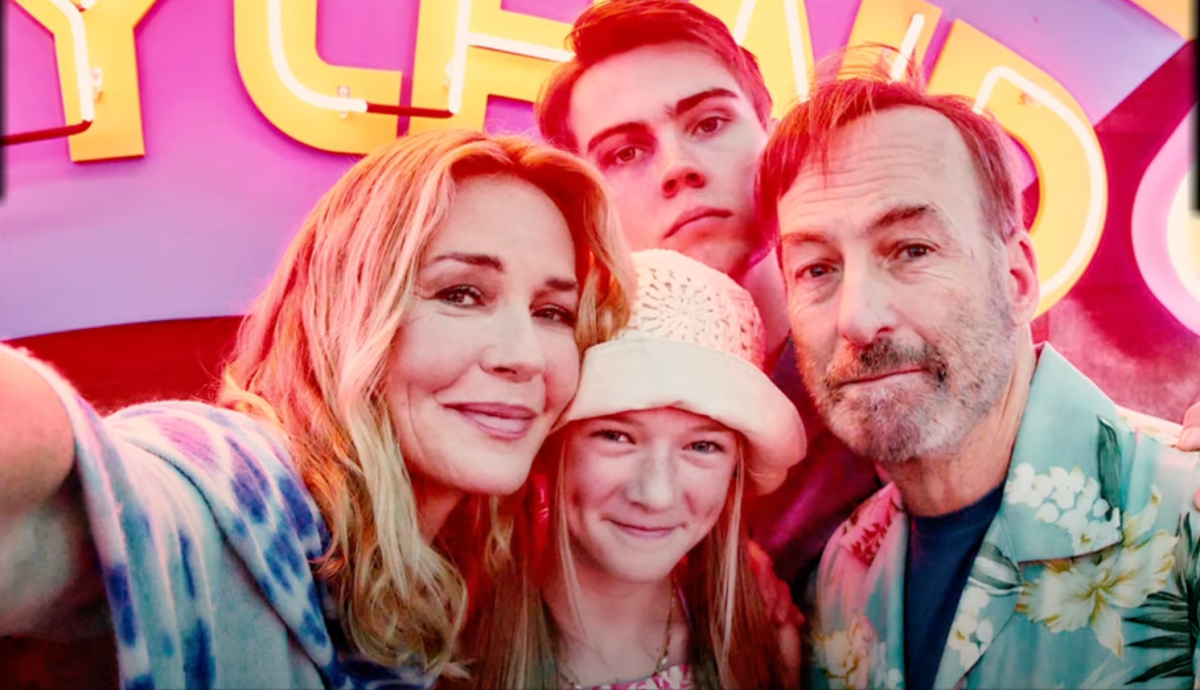


Leave a Reply