
One of the fascinating aspects of longevity in arts criticism is tracking the evolution of, in this case, a filmmaker you’ve had the opportunity to interview in the past. New works allow for a chance to revisit earlier conversations, to detect hints of ambition, if the interview occurred towards the start of the filmmaker’s career, or to anticipate a restlessness of the creative spirit, a willingness to leap from one genre track to another or to bolt the scene entirely for a spell, to recharge the battery.
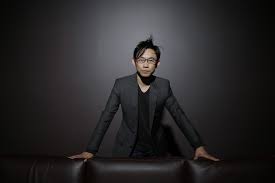
I caught up with James Wan while he was doing press for Death Sentence back in 2007. It was late summer, a week or so before the film’s opening in the Cincinnati/Dayton market, and what I remembered, before actually going back to listen to the interview, was a testiness in Wan, which emerged towards the end of our chat. Looking back, I must admit to being able to understand his frustration. At the time, I found myself pressing Wan on a particular point, a sore spot, to be sure, regarding the mis-labeling of his work – specifically Saw, which he directed from a story he conceived with Leigh Whannell, his writing and producing partner on the franchise – as “torture porn.” I was in the midst of what would become a year-long side project, a conversational investigation into industry feelings about the media-dubbed horror niche. Every phone interview with actors, writers, or directors featured a brief detour down this side street, and Wan, a cordial and spirited interviewee fought against being dragged into this blind alley.
What I hear now, almost ten years later, is a passionate moviemaker, a bit of a film nerd, who lobbied to make sure I understood and appreciated the distinction between, for instance, labeling Death Sentence “a revenge story” versus calling it a “vigilante movie,” a tag he felt was far more appropriate for “Death Wish.” He was eager to flip the script and ask questions of me, for more than mere points of clarification. Wan obviously wanted to suss out what I, as both a critic and a viewer responded to in his work and the genre movies of the moment, and it was clear that he came at filmmaking from the same two-tiered approach – as a filmmaker and as an engaged member of the audience.
This was a guy who expressed love for David Lynch and Italian horror films, yet who plied his trade in a more conventional genre mode, as a means of offering himself the chance to keep working until he could achieve a level of respect within the industry that might afford him the opportunity to segue into the kind of projects that spoke more to his passion. It would seem that his franchise building with The Conjuring and Insidious probably define his true filmmaking intentions.
So what are we to think of Furious 7?
I have to say, it makes perfect sense. Wan wants to make movies with a broad topicality that tap into sensations. He wants us to “feel”; now whether that involves horror, revenge, or in the case of Furious 7, an immersion to an adrenalized state of pure escapism, feeling is feeling.
The same questions could be asked of Justin Lin, who took over The Fast and the Furious series in 2006 with the Tokyo Drift installment and then shepherded the franchise through three more movies before passing the baton to Wan. Lin is now among the shortlist of insiders seeking the title of hardest working man in the industry. He’s scheduled to helm the first two episodes of the new season of HBO’s True Detective, Star Trek 3, The Wolf Man, and an untitled Jeremy Renner/Bourne film in 2016, while also serving as executive producer for the new Highlander reboot.
Not exactly what trend sniffing writers would have guessed based on his 2002 indie crowdpleaser Better Luck Tomorrow. I imagine a likely similar kind of discussion might have taken place with Lin around the time of the release of Annapolis in 2006, as the one I had with Wan, minus the touchy torture porn dispute. There is a hunger in each of these filmmakers, a burning desire to prove themselves that has grown far past their early aspirations.
Wan has The Conjuring 2: The Enfield Poltergeist on tap as his next directing gig and Saw VIII lurking as a writing project (that may ultimately only end up as another producing credit), but would he be willing to continue to steer The Fast and the Furious into what star Vin Diesel has already hinted as another trilogy of stories following Furious 7? Lin seemingly put his personal considerations on hold to command the trilogy that some would say defines the current phase of the franchise.
But Wan is a different breed. He embraces the fury of his passions with an unwillingness to downshift when he’s got his good (lead) foot so firmly on the gas. What is also quite obvious though is that Wan doesn’t feel the need to absolutely slam any creative door or designate any path a dead end. If the furious gang catch up with him down the road, there would be no reason why he wouldn’t let them hitch a ride with him one more time. (tt stern-enzi)
 terrencetodd