
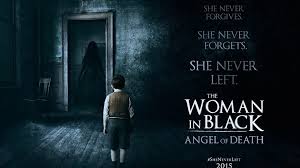
I remember the sneaky thrill of watching the first installment of The Woman in Black; the joy of discovery that Daniel Radcliffe could be something other than a scared (and scarred) boy wizard, which was surprising to me because I never bought into him or the idea of Harry Potter in the first place. There was never any of the necessary tension in that series, and why should there have been – young Potter had the mark of greatness tattooed on him just like Jesus had been given the nails and the thorny crown along with the gold, frankincense and myrrh. You don’t grow into these kinds of roles, especially one where everyone knows you’re not going to die, so that doesn’t leave much for a naive newbie to do, except play wide-eyed.
Richard Linklater, during the initial press run for Boyhood, talked about the casting of Ellar Coltrane, the tricky notion of settling on a boy who might (or might not) grow into an uninteresting person along the way. The decision came down to casting for the character, but placing faith in Coltrane becoming a meaningful person right before our eyes. Twelve years later and Linklater looks like an emotionally-intuitive pre-cognitive genius.
Something similar could have happened with Harry Potter and Radcliffe, and yet, it obviously couldn’t have. This was the blockbuster franchise that would come to define Young Adult adaptations; Harry Potter was, as I said at the start, pre-ordained to be something unable to evolve. Young Potter could never be anything more than a character; there wasn’t a real boy in the wizard, just a carefully worded description of what a “boy” might be.
But Radcliffe, when given the chance to shed the cloak of innocence, did so with an assured confidence and maturity. As a harried and grieving solicitor assigned to investigate the Eel Marsh House in The Woman in Black, Radcliffe, despite still being saddled with a preternaturally boyish face, settles into the period surroundings and the grim atmospherics, goosing us with psychology rather than reactive gimmicks. He convinces us that the evil is real without forcing director James Watkins to rely on the routine scare tactics.
Sadly, the Radcliffe effect is part of what’s missing in the new iteration – The Woman in Black 2: Angel of Death. The narrative leaps forward in time, to the early 1940s, with London suffering (characteristically with a stiff upper lip, mind you) under constant bombing from the Nazis. These initial frames though capture a different type of horror that offers an intriguing promise. As citizens emerge from bomb shelters, the damaged ruins that remain tell the story of pummeled psyches and the supreme effort necessary in continuing on. If only that had been the focus…
Instead, director Tom Harper and screenwriter Jon Croker resort to the standard smoke and mirrors (or in this case, the shadowy background movements and creepy hands hovering over the shoulders) of the black-garbed ghost who lost her child and now wants everyone else to suffer. The potential melancholy of linking her loss to the lost innocence of Britain’s orphaned children is left unexplored. I would have even been pleased with a nod comparing the degrees of evil/horror that Michael Mann attempted to tease out of his adaptation of F. Paul Wilson’s novel The Keep back in the early 1980s. That film delved into an ancient evil awakened by the presence of the occupying Nazis in a small European village. Mann overplayed the special effects and failed to truly bring the philosophical argument to life, but he was more than aware of the angle.
Angel of Death doesn’t seem to care enough about the deeper reading. The point begins and ends with scaring the kids. When will Hollywood embrace grown-up fears? (tt stern-enzi)
 terrencetodd