
Timing is everything when, as a freelance writer, you’re fielding interview opportunities and trying to figure out when, where, and how to place pieces for coverage. In my case, I’m fortunate enough to have two alternative weekly outlets and this blog (combined they allow me ample space for diverse regional coverage of the film scene and larger cultural topics), but it still boils down to the timing of subjects. Will I be able to catch up with talent at a time when their projects are ripe for consumption? Is this their pop cultural/social media moment?
As a result of a couple of intriguing interviews with film composers at last year’s Toronto International Film Festival (TIFF), I found myself eager to explore this under-represented and quite impactful facet of moviemaking, so I ended up spreading the word within my publicity and marketing contacts, alerting them to my interest in scores and all things musical.
Ping!
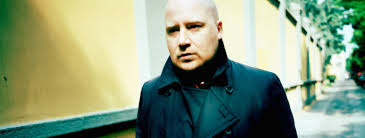
An interview query arrives. Johann Johannsson, the Icelandic composer for The Theory of Everything, is available, but the timing, at first, is off. The film, which I saw this year at TIFF, had already opened in our market, and since Johannsson’s not exactly a household name, I would have to fish around for an angle. I seized the opportunity and the challenge, intent on feeding my burgeoning curiosity about the creative process of developing music for film and trusting that I would figure something out. Lo and behold, I didn’t have much to worry about at all, because by the time our interview date rolled around, the Golden Globes had announced their nominees and Johannsson had earned a coveted slot in the Best Original Score category for The Theory of Everything (one of the film’s four nominations from the group).
So, I dove headlong into the interview, kicking things off with a hearty congratulations to Johannsson for the honor, while noting that it was not as if Everything was his first major score. His work had already crept quite silently into my psyche; he was the man responsible for those invisible shivers running up and down my spine during last year’s sensational and under-rated thriller Prisoners.
Cue up our Call and Response on The Theory of Everything
tt: Could you start off by telling me about your musical background?
JJ: In terms of writing for film, I’ve been writing film music for about 15 years now, and my background, I studied piano and I’ve spent time playing in rock bands as well and playing guitar. I have this combined background of indie rock and electronic music and classical music. I think all these elements combine in the music I write in some way. But I got into writing music for film through musical theater. That’s how I developed my voice, writing music for theatrical productions. I developed my voice as a composer through that. I’ve also done a lot of solo work, my own projects, and I think when my albums started to get known outside of Iceland, they reached the ears of filmmakers, then those filmmakers started to reach out to me – both to license my work and to have me compose for them. It slowly and organically evolved into what I’m doing now.
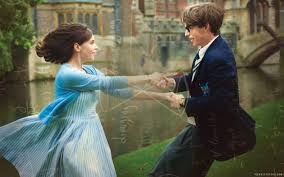
tt: How did you get involved with The Theory of Everything and at what stage did you enter the process?
JJ: I was contacted after they had finished shooting, soon after they had started editing the film. James Marsh got in touch and asked me to get involved with the film. So the first thing I saw was a rough cut, a fairly long 3 and a half hour cut, which had a shape and a structure already, so it gave me a very good idea of the mood and feel of the film. That was where I joined the project.
tt: At that point, I assume there was temp music or were you able to come in and figure your own way through the scenes?
JJ: There was some temp music, not a great deal though. James (Marsh) had put some in there and some of it was my own music actually. The music was there really to aid in the editing process.
tt: You said you got your start working in theater and I assume that’s different than working in film. Is there some way you could set up a comparison for the two?
JJ: It’s similar in that it’s a dramatic narrative that you’re underscoring. I think when I work in theater, I work in a very filmic way, a very cinematic way. I think, in general, the music I write, when I’m not writing for film, is very informed, very visual music. It evokes images and emotions and moods. That’s just a very natural way for me to write. So when I started writing film music, it felt natural, like something I had been doing for a long time. I don’t feel like I’m putting on my film composer hat on when I write for film. It’s very much the same process, whether I’m writing my own projects or for film. There are different practical considerations when you’re writing for film. There are practical parameters, very specific to writing for film, but the creative process is the same.
tt: In today’s films, I feel like there are more composers like you, who are coming with a much more diverse background and approach to music, whereas, the old school approach is the John Williams style. What are some of the film scores or who are some of the film composers who inspired you?
JJ: I would say that the composers who really opened my eyes to film music and made me aware of film music as an art form and something that I could feel very passionate about were firstly, Bernard Herrman (Citizen Kane, Psycho, and Taxi Driver) and secondly Ennio Morricone (known for his association with Sergio Leone – The Good, The Bad, and The Ugly & Once Upon A Time in America – despite having written nearly 400 film scores thus far). Those are maybe the two big ones for me. I’ve absorbed their music very heavily and I’m a huge fan of Bernard Herrman for example for the way he uses harmony and the way he uses repetition and this kind of relentless rhythm and the power of his phrases, melodies and chord progressions. It is a very individual and very powerful voice. I remember hearing Bernard Herrman for the first time when I was in my mid-to-late teens, early twenties and I became transfixed by his music. I think maybe in some of my solo work you can hear echoes of this or maybe in a score like Prisoners, you can hear some vague echoes of Herrman. But there is also Morricone in there too. There are echoes of Morricone in The Theory of Everything, but its all filtered through my own sensibilities and background. You develop a style by synthesizing all of these influences.
tt: You have this evolving film work and your solo efforts. How do you juggle the demands of the two and are you able to still focus on your own work?
JJ: I’ve reduced the touring (for the solo work) the last couple of years. I hardly do any touring at all. I have been doing a piece of mine called The Miners’ Hymns, which is actually (part of) a film by an experimental filmmaker called Bill Morrison. It is a silent film with music and its a new film. We’ve been touring that, screening the film with live music. Its music for a symphony orchestra and so we’ve been doing four-to-six shows a year. That’s really the only thing I’ve been doing live. I’ve been spending a lot of time on film music in the last three or four years. The last year and this coming year, I’m trying to shift to doing more of my own work, carving out time to work on my own projects. The challenge is I’m getting offered really interesting projects in the film world that I want to do as well, so I have to do this judiciously, so that I can get everything done.
Sidebar – Timing
Coincidentally to preparing for this interview with Johannsson – binge listening to The Theory of Everything, which stands up surprisingly well on its own, especially the lovely melodies of “The Dreams That Stuff Is Made Of” & “Forces of Attraction” – I found myself listening to The Idler Wheel Is Wiser than the Driver of the Screw and Whipping Cords Will Serve You More than Ropes Will Ever Do, the 2012 release from Fiona Apple (just her fourth collection) and I couldn’t help noticing the similarities between her work and the sense that Johannsson talks about, the cinematic way that some musicians capture. Apple’s heavy and percussive piano playing seems haunted by “the repetition and relentless rhythm” in Herrman’s scores. I love how even with her vocals front and center, you can’t miss the musical anchor of a track like “Daredevil” or the mournful musical narrative of “Regret,” a song that deserves its own “visual score.”
The through-line, one could argue, continues into the orchestral film work of Radiohead guitarist Jonny Greenwood (frequent collaborator of PT Anderson – There Will Be Blood, The Master & Inherent Vice). This is the new approach I was citing during the interview. It is a fine example of an updated sensibility that bodes well for film and music as we move forward, challenging the pessimistic notion that the best days of film and music (or the merger of the two) are behind us. Johannsson and these musicians convincingly disprove that theory. (tt stern-enzi)
 terrencetodd