
They say the devil’s in the details, and Tate Taylor’s James Brown biopic Get On Up proves the saying true, although the problem is that the devil’s missing. Of course, it must be noted that the film works as well as it does because one key element is firmly in place – Chadwick Boseman is the Godfather of Soul, the hardest working man in show business, Soul Brother #1, James Brown. The level of commitment by Boseman is obvious right from the start. Every idiosyncratic character detail is lovingly rendered – the peacock little man strut (despite the fact that Boseman’s not as short as Brown was), that affected way Brown held his hands, the growling rasp in the voice – not simply to imitate the man; Boseman’s intention is to become the man. He dives deep, holds his breath, and fearlessly swims down even further. From the outset, the skeptics worried that he wouldn’t be able to do the splits, but that’s a mere surface concern. Again, the details matter much more and Boseman honed in on the nitty gritty.
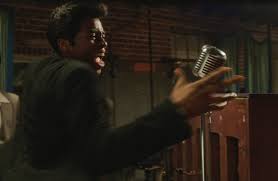
Chadwick Boseman in “Get On Up”
If only Taylor, and his screenwriting team (Jez & John-Henry Butterworth) had been able to do the same. The aim here was to sidestep the more traditional beats and measures that drive musical biopics. We all know the structure – catch the figure later in life as they are about to step out before an adoring audience, then take the story back to a similar point near the beginning, before truly going all the way back to the hard times of childhood, highlighting significant foibles, love affairs, and the major musical discoveries along the way towards that initial moment. Give us a few good laughs, some great musical interludes, but don’t depress us with too much of the doom and gloom period.
The Get On Up crew tinker with things a bit, primarily by jumping around the time line, cutting and pasting story elements, remixing (I suppose) events through dramatic shifts in beats and rhythms, but the effort comes across as haphazard and fractured for no real purpose. Thematically, it all feels unnecessary, much like the other trick Taylor pulls from his sleeve – having Brown directly address the audience. Brown breaks the rules in life and music, so why not have him do the same in the telling of his own story, right? It seems smart and at times, especially when he’s explaining how he maneuvered around the payola schemes that dominated radio play and concert promotion, it truly works. What the technique sets up for audiences though is the sense that we might actually get access to Brown’s thoughts and rationale for some of his more problematic moments. What was he thinking when he beat up DeeDee Brown (Jill Scott), one of his wives or how about opening up his state of mind when he was fleeing from the cops after shooting up his property at the strip mall?
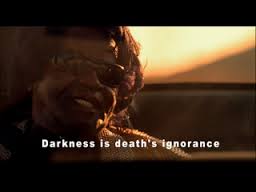
James Brown in “Beat the Devil”
There’s nothing wrong with employing cinematic tricks to liven things up, but you’ve got to be able, particularly in this case, to do so with the same kind of dedication to the groove as the subject. The best example, as it pertains to James Brown, comes from the late Tony Scott, who helmed “Beat the Devil,” the 2002 installment of the BMW short series The Hire that featured Brown as a fictional version of himself who enlisted The Driver (Clive Owen) to serve as his racing stand-in against The Devil (Gary Oldman). This was during Scott’s later phase where he mixed and matched film stock, cooked up dizzying movement in and through the frames, and even played around with subtitle scrolls all across the screen (which he does so brilliantly with Brown’s garbled dialogue here). What “Beat the Devil” accomplished in less than 10 minutes of screen time should have been the blueprint for Taylor. Scott gave viewers a cinematic twin of Brown’s dynamic musical genius that was devilishly groovy fun. Check it out. (tt stern-enzi)
 terrencetodd