
Tags
tt stern-enzi
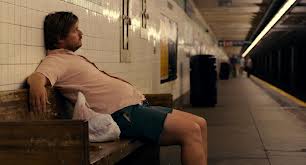 Comedy lies at the heart of Tim Heidecker’s The Comedy, a seemingly aimless tale of a privileged hipster named Swanson (Heidecker) bored with all that the accident of his birth has given him. Our “hero” somewhat dimly watches over his invalid father, aware that he stands to inherit a considerable estate upon the old man’s death, but nothing matters, other than an existence filled with endless parties with his aging friends, drinking and prancing about without a care or sense of decorum. Life is a hedonistic bacchanal, the likes of which recalls the by-gone age when such terms first sprang into the lexicon.
Intriguingly, Swanson’s life offers a modern reflection of that earlier time, harkening back to Aristotle and his very definition of comedy, which “originated with the komos, a curious and improbable spectacle in which a company of festive males apparently sang, danced, and cavorted rollickingly around the image of a large phallus.” When we first see the cavorting Swanson, he is among his drunken fellows, in various states of undress – some, in fact, baring their asses to the largely disinterested gathering – and any one of these men could easily be the stand-in for that “image of a large phallus.” In today’s culture, with bromance hanging heavy in our collective consciousness, there’s not an ounce of that in The Comedy. Swanson seeks connection with others, male and/or female, but he’s forever isolated, removed even from the laughs that comedy should inspire.
What we gather from our time with him, during the course of The Comedy, is something more philosophically rooted in tragedy. Swanson is constantly at odds with the world around him, out of step with even his closest associates. Social media has appropriated the terms “friend” and “like” to encompass virtual relationships and a sense of closeness that’s ironic, at best. Through Heidecker’s performance, we can appreciate the actual distance between Swanson and his social community, because we see, as the film progresses, his very real effort to cross the divide. He leaves the broad hijinks behind, the binge-drinking and the aimlessness encounters with (stereotypical) groups of people, forcing himself into (individual) human interactions. That’s not to say that this level of engagement always achieves a stated (or assumed) purpose, but the acts themselves reflect growth.
Back to Aristotle, and the idea that comedy bears the mark of “the rise in fortune of a sympathetic central character.” Having emerged from all of the pratfalls, we’re supposed to be able to chart a progression from “an ugliness” in the central figure to a well-earned degree of sympathy for his/her plight on their way towards a happy ending. Happiness, by the end of The Comedy is a strictly relative notion for Swanson. He’s barely logged more than a few precious steps along the grand philosophical marathon that is life, but he’s ambling along and reminding us just how hard comedy can be.
 terrencetodd